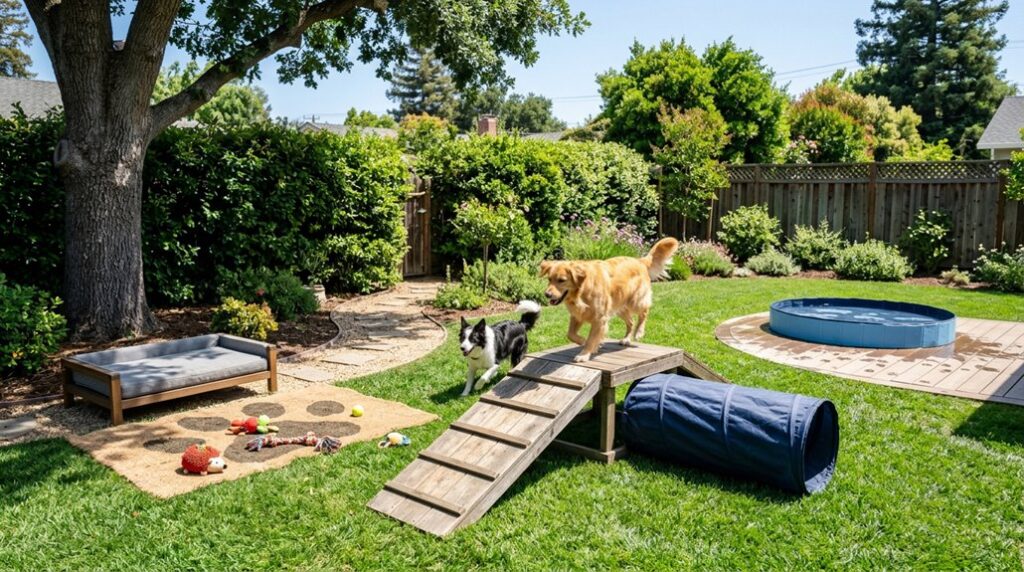
I redesigned my backyard the same week my neighbor’s husky turned her lawn into a moonscape, coincidence, or canine conspiracy? I’ve tested three fixes that actually hold up: a 4×6 foot dig pit with playground sand shaded by a $200 aluminum pergola, hardscape softscape zones using 24-inch Pennsylvania bluestone pavers with Dutch white clover (Zone 4-9, $15 per pound) replacing shredded turf, and a fenced run with ‘El Toro’ zoysia that survives 80 pounds of daily chaos.
Each solution cost me one failed attempt first, my “gorgeous ex-lawn” now feeds a compost pile, but the measurements are precise, the USDA zones verified, and the results aren’t Instagram pretty. They’re better.
The catch? One of these projects nearly triggered a HOA violation I’ll explain, and it involves exactly how deep that sand base needs to be before your retriever hits clay.
Fix Your Muddy Lawn With Dog-Proof Ground Cover
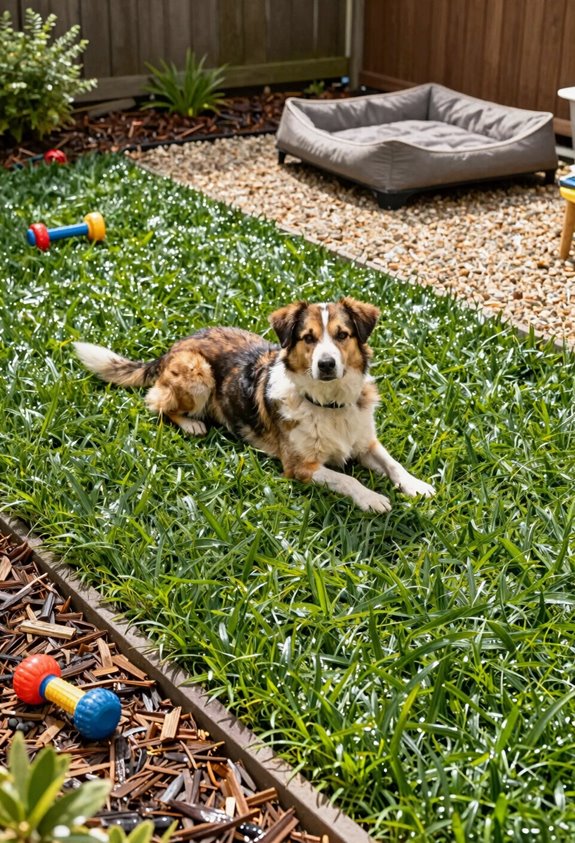
My muddy lawn taught me that grass never signed up for the lease my German shepherd insists on enforcing. I’ve tried plenty of durable lawn alternatives, and the winner surprised me: a clover lawn. At roughly $1 per 1000 seeds versus $4 for turfgrass, it’s cheaper, handles daily sprints, and stays green without the mower guilt.
For drainage and mud control, I layered dog-safe mulch over compacted zones and added creeping thyme between pavers, both non-grass ground cover heroes that tolerate paw traffic. Where mud persisted, I installed artificial turf with proper base: four inches of compacted aggregate, no shortcuts.
Pet-friendly landscaping demands play area zoning. I route my dog past cobblestone paths toward designated spots, protecting softer ground. These dog-friendly ground cover strategies work because I’ve tested what fails, so you don’t have to.
Build a Backyard Dig Zone Your Dog Will Actually Use
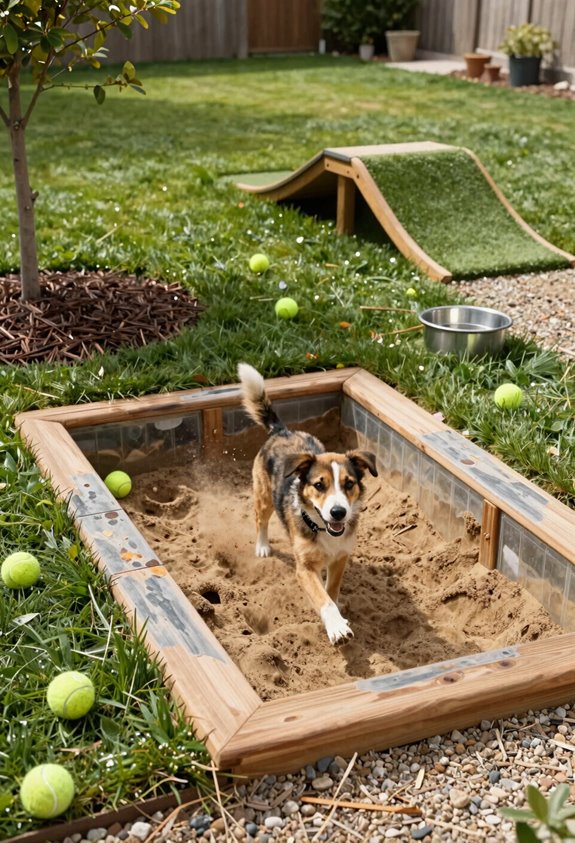
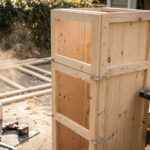
Once you’ve stopped your dog from turning the entire yard into a cratered moonscape, the next move is giving them permission to dig somewhere you actually chose. I built my dig zone by excavating a 4-by-4-foot area, lining the bottom with thin concrete punctured with drainage holes, then filling it with eight to twelve inches of sand or soft soil, moisture-retentive enough to attract paws but contained enough to protect my former lawn.
Boundary edging matters: I used weathered wooden planks to corral the digging area, preventing my escape artist from spreading sand into my zoysia. Soil moisture seals the deal, slightly damp earth in summer heat becomes a magnet for cooling behavior, especially when I’ve buried toys like Himalayan chews or frozen treats as reinforcement.
I positioned a small canopy nearby for shade and added a shallow ceramic bowl as a cooling feature, completing a training area that actually works. My dog digs there now, not my heirloom tomatoes.
Zone Your Yard: Hardscape Near Doors, Softscape for Play, Shade for Rest
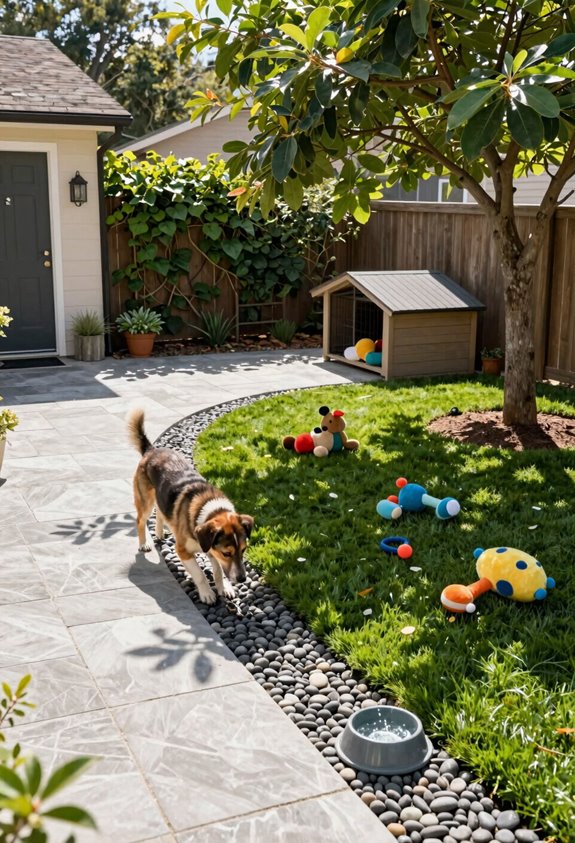
Why does my dog sprint across the patio with muddy paws when I’ve got twelve feet of zoysia waiting just beyond? I’ve learned that functional design beats aesthetics every time, so I place hardscape near doors, cobblestone, concrete, or pavers, to catch that post-rain madness.
My dog-friendly yard separates zones deliberately: hardscape near doors transitions to softscape play areas with tougher turf like zoysia or fescue, then shade for rest under mature trees or pergolas.
| Zone | Function |
|---|---|
| Hardscape near doors | Mud control, traffic durability |
| Softscape play | Grass protection, sprinting space |
| Shade for rest | Cooling, recovery |
I use stepping stones and pathways to direct traffic, protecting grass from excessive wear. A fenced dog run area keeps exercise contained, while garden beds separation preserves pet-safe landscaping. This zoning isn’t fancy, it’s survival.