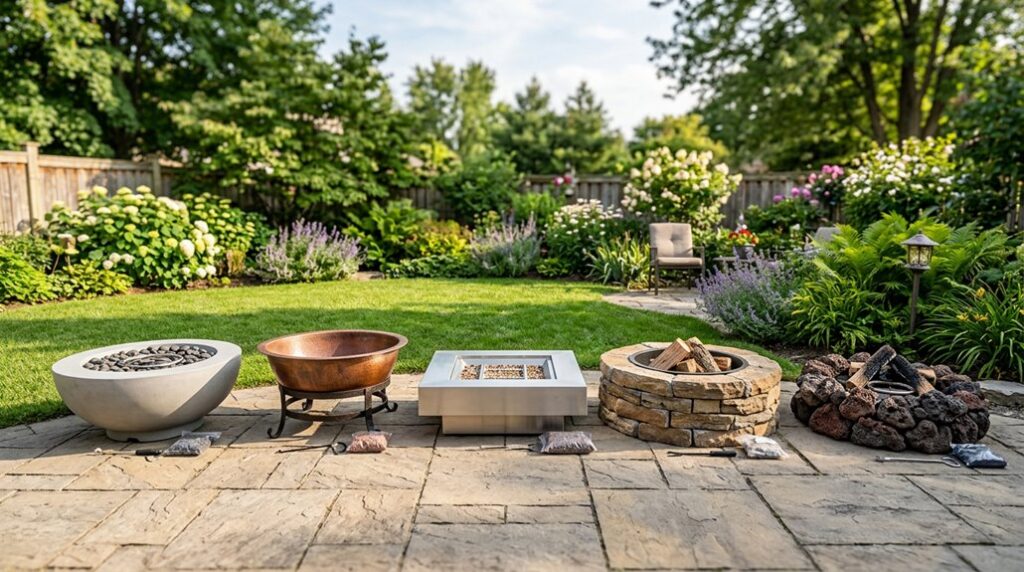
I’ve installed three fire pits in my own “gorgeous exlawn”, one so poorly sized I nearly tripped into it carrying mulch, and learned that DIY kits beat prefab options because you control block arrangement, ventilation gaps, and that critical smokeless ring integration.
Modular Corten kits run $400-$800, withstand USDA zones 4-9 without flaking, and let you adjust from 24″ (8 seated, barely) to 36″ (12 comfortable, serious heat radius). My botched first attempt used 14 stacked cinder blocks with zero airflow; the smoke followed us like a lost dog. The right kit specifies exact block counts, typically 36-48 for a 30″ pit, and diagrams vent channels I ignored to my regret.
5 Reasons DIY Fire Pit Kits Beat Store-Bought Options
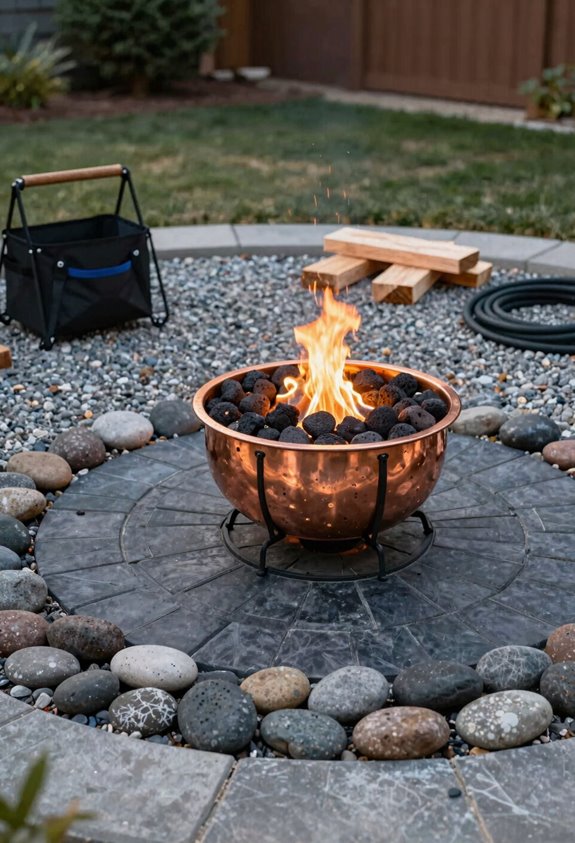
The trouble with most store-bought fire pits is that they assume your backyard wants exactly what everyone else’s does, which, if you’ve spent three weekends wrestling with compacted clay or a stubborn root system from a departed maple, you already know isn’t true. That’s where fire pit kits change everything, and why I’ve swapped store-bought regrets for DIY solutions.
You get real customization: your enclosure design, your materials, your smokeless fire ring integrated properly. The steel insert and durable materials, Corten if you’re fancy, standard steel if you’re practical, outlast those thin store bowls by decades. Modular build means you’re not rebuilding when the patio expands. Cost savings add up fast, especially when you’re not buying features you’ll never use.
For your outdoor living space, nothing beats a kit that belongs precisely where you’ve planted it.
Size Your DIY Fire Pit Kit to Your Actual Space (Not Just Your Yard)
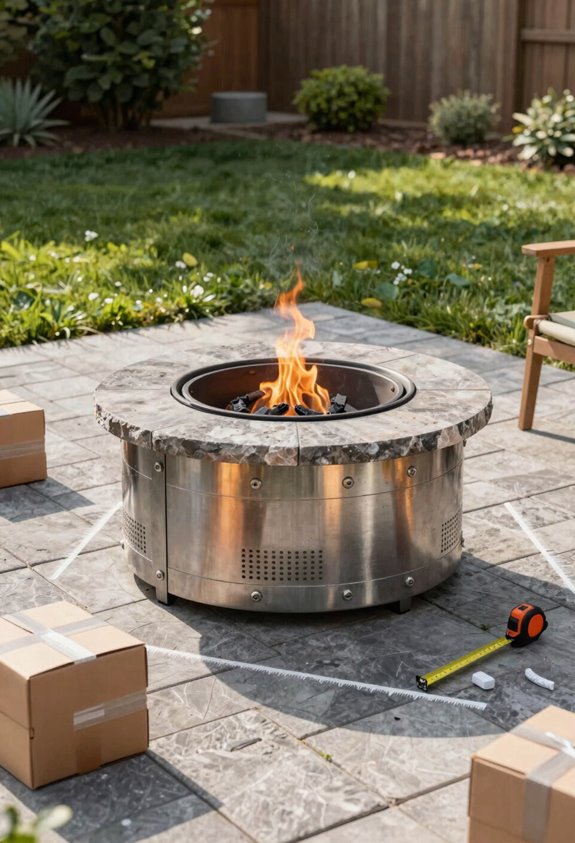
Choosing a fire pit kit based on yard size alone is how I ended up with a gorgeous exlawn and a fire ring that sat exactly where my spouse wanted tomatoes. Fire pit kit sizing demands actual space measurement, not optimistic eyeballing. I measure twice now: enclosure footprint plus seating layout plus space clearance equals livable backyard.
| Kit Size | Retaining Wall Blocks | Finished Diameter |
|---|---|---|
| 24-inch | 38 | 40 inches |
| 30-inch | 44* | 46 inches |
| 36-inch | 53 | 54 inches |
*Estimated based on proportional scaling
Footprint planning accounts for the smokeless ring’s 3-inch lip and 16-inch height. Ground prep needs 2-3 inches of paver base within your stone circle.
I learned: tomatoes forgive, but concrete doesn’t.
Compare 24, 30, and 36-Inch Kits: Seating, Heat, and Finished Dimensions
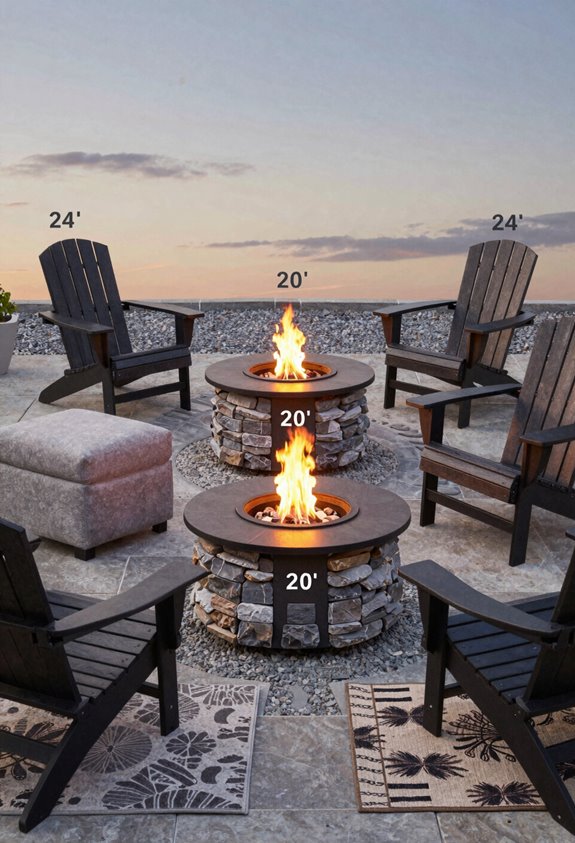
How do you actually choose between these three kit sizes when the price jumps don’t tell the whole story? I’ve wrestled retaining wall blocks into circles enough times to know that kit footprint and seating capacity matter more than sticker shock.
- The 24-inch smokeless fire pit ring needs 38 retaining wall blocks, seats four intimately, and fits tight patios where a 16-inch ring with its 3-inch lip won’t overwhelm your gorgeous exlawn.
- The 30-inch outdoor fire pit scales to six people, demands 38-53 blocks depending on your ambition, and ships with a 26-inch lid and vent blocks that actually work.
- The 36-inch beast delivers 8+ seats, a 38-inch finished dimension, and weathering options if you’re committed to Corten’s patina, though I’ve seen DIY installation go sideways when natural gas or propane lines complicate the dig.
Corten vs. Carbon Steel: Which Weathering Pattern Matches Your Style
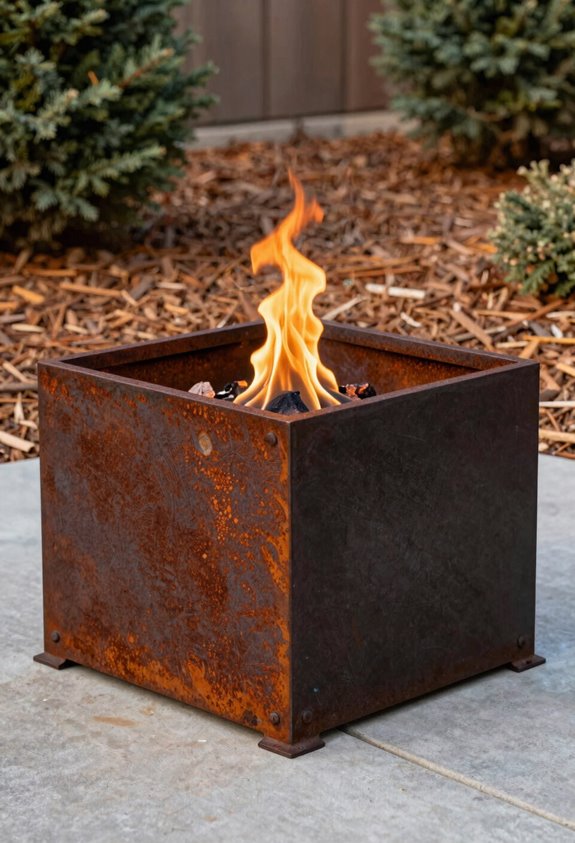
When you’ve watched a fire pit weather through five seasons of Zone 6b winters, you learn that steel choice stains your patio long after the installer’s left. I’ve seen both paths: Corten steel, that noble weathering steel, forms a protective patina with rust resistance baked in, gorgeous ruddy armor that asks for little maintenance. Carbon steel rushes toward darkness, oxidizing faster, demanding more vigilance in wet climates where I’ve patched premature corrosion.
Both 24-inch and 30-inch kits offer the Corten option (Variation ID 4642, if you’re hunting). Your aesthetic preference shapes durability here: weathering steel settles into rustic permanence, while carbon steel shifts rapidly, wilder surface changes. For outdoor fire pit longevity with restrained drama, I favor the Corten. Smokeless fire pit or not, the steel beneath decides your decade.
Block Layout and Ventilation: The Smokeless Setup That Actually Works
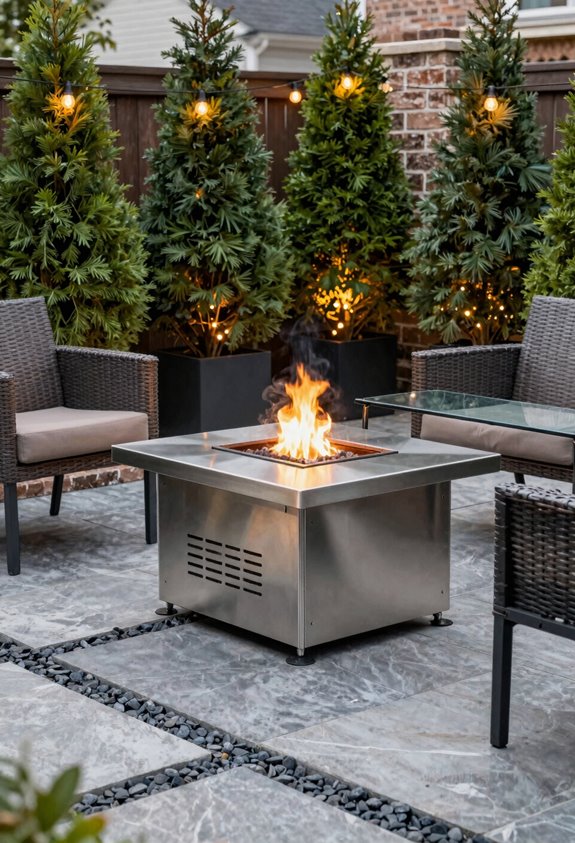
The steel might decide your decade, but the blocks decide your evening. I’ve built enough smoky disasters to know that airflow regulation separates the gorgeous exlawns from the neighborhood eye-rolls. My go-to 24-inch kit uses Weathering steel for that raw patina, but the real magic lives in the block layout.
Here’s what I’ve learned about nailing the smokeless burn:
- Stack exactly 38 retaining wall blocks around the 16-inch tall smokeless ring insert, no shortcuts, or you’ll choke everyone out by halftime.
- Position both Pine Tree vent blocks precisely; they’re your ventilation design’s lungs, feeding oxygen where combustion actually happens.
- Let the vent blocks do their job regulating airflow into the ring, because guessing ruins dinner parties.
That separately-shipped lid? Worth the wait for a smokeless setup that actually works.