Composite decking is the vinyl siding of outdoor living, promising permanence while hiding its cracks beneath a glossy cap.
I’ve installed three brands across two USDA zones, and I’ve learned that “maintenance-free” is marketing’s most reliable lie.
The sun doesn’t just fade these boards; it cooks them, warps them, and locks you into colors you can’t change.
Before you sign that contractor’s estimate, I’ll show you exactly where my own decks failed, and why yours might too.
Why Composite Decking Fades and Stains Despite “Maintenance-Free” Claims
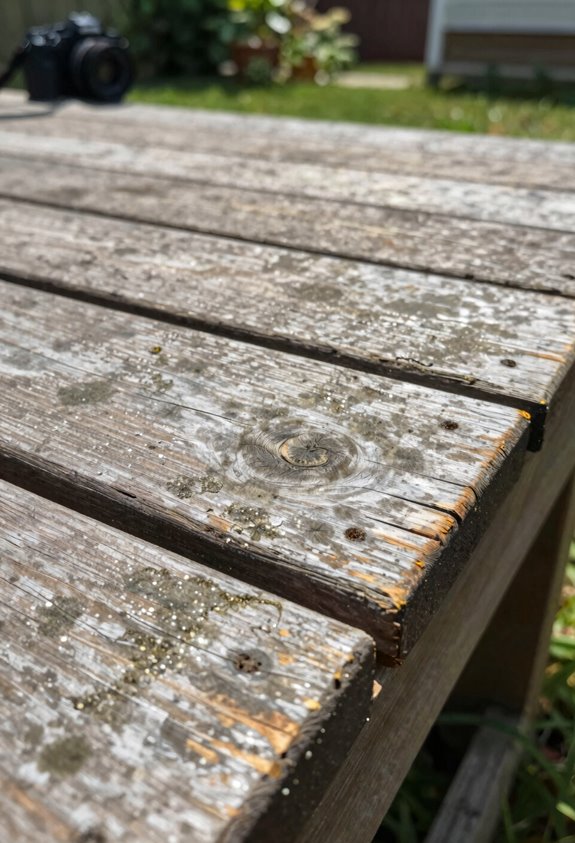
How exactly did “maintenance-free” become the battle cry of an industry selling plastic-wrapped sawdust to people who just want to grill in peace? I’ve learned the hard way that composite decking demands more attention than advertised. UV exposure relentlessly bleaches the surface, and colour fading turns my gorgeous exlawn into a mottled patchwork within three to five years. Even co-extruded boards, those with capped shells promising UV resistance, eventually succumb, though they outlast standard WPC by maybe a season or two.
Here’s what stings: you can’t paint or stain composite decking once manufacturing sets the pigment. You’re stuck with fading mismatch between boards, especially with darker colours that telegraph every blemish. Staining from berries, grease, and mould requires aggressive cleaning, so much for maintenance-free living.
How Heat and Warping Make Composite Decking Uncomfortable
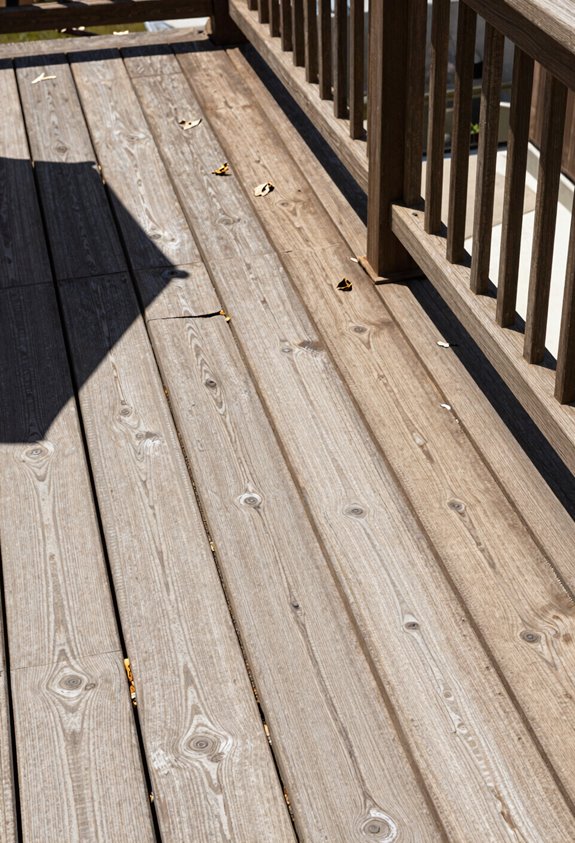
Why does stepping onto my composite deck in July feel like I’m auditioning for a firewalking act? I’ve measured surface temperatures hitting 140°F after four hours of direct sun exposure, and my darker boards, gorgeous exlawn charcoal I couldn’t resist, turned my retreat into a no-barefoot zone.
Composite decking heat retention isn’t just a color problem. Even lighter tones and so-called cooler composites run 20-30 degrees hotter than cedar, making comfort barefoot nearly impossible during peak hours.
I’ve watched warped boards emerge after two seasons of temperature fluctuations, creating trip hazards where expansion joints failed. Wet mornings bring their own misery: reduced slip resistance on plastic surfaces demands textured finishes, yet many anti-slip coatings wear thin within eighteen months. My poolside installation taught me that lesson the hard way.
The Color and Repair Problems That Trap Composite Deck Owners
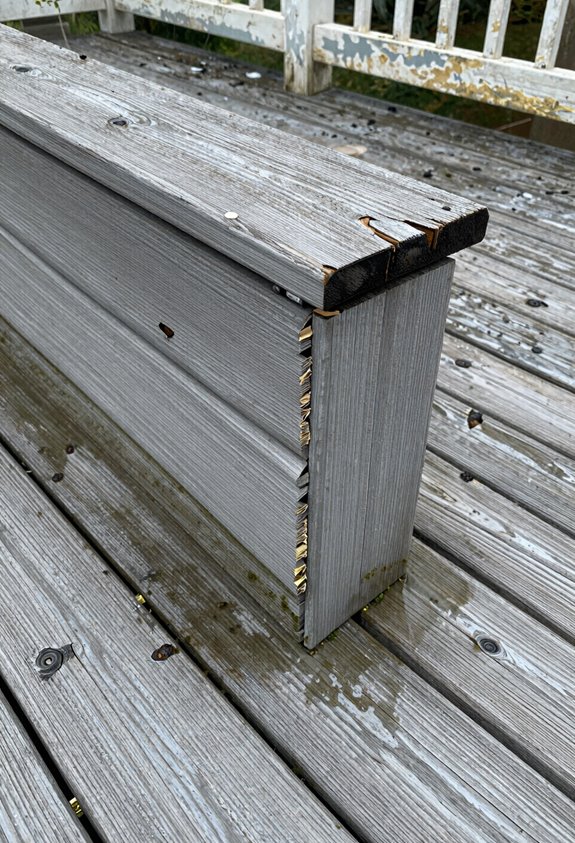
The heat I griped about was only half my battle with that charcoal decking; once the boards started shifting from rich espresso to mottled gray, I realized I’d painted myself into a corner I couldn’t repaint out of. See, composite decking color isn’t like your garden beds where you swap petunias when purple clashes. This stuff locks you in.
UV exposure hit my south-facing planks hard. Heat absorption from that gorgeous exlawn charcoal amplified the color fading, and within three USDA-zone-7 summers, uneven fading created patches like a dalmatian’s coat. My neighbor’s “fifty-year” fade warranty? Fine print excludes natural weathering, so long-term color retention became wishful thinking. Color mismatch between replacement boards and originals makes repairs laughable. Repaint not possible means your installation color choice haunts you like bindweed in clay soil: permanent, creeping, utterly irreversible.