Nearly 30% of deck collapses involve improperly installed structures like pergolas and gazebos, which is exactly why I spent three weekends reinforcing my 12×16 cedar platform before bolting down a 10-foot aluminum frame. My engineer neighbor charged me $400 to confirm the joists could handle 50 pounds per square foot, live load plus the occasional snow drift here in Zone 6b.
You’ll need to know whether your boards are lying to you about what’s underneath.
Will Your Deck Support a Gazebo? Check Load Capacity First
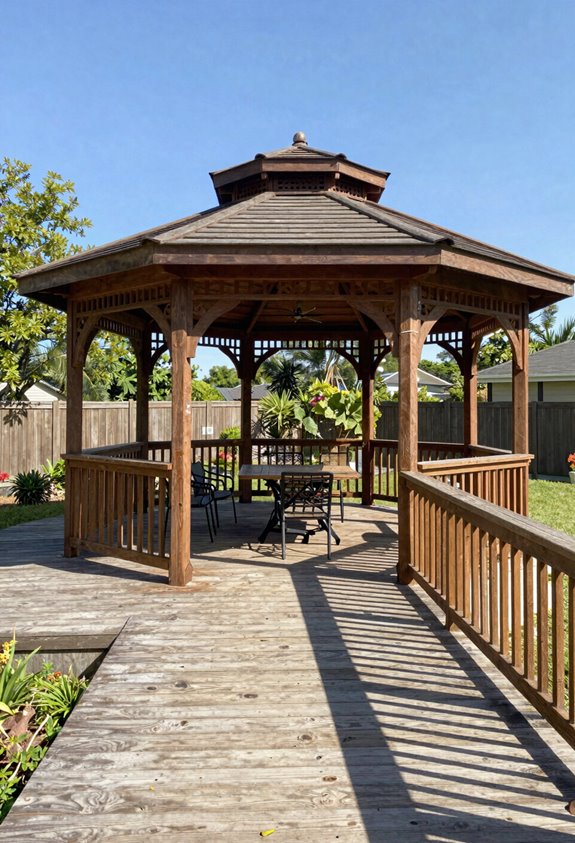
How exactly do you plan to park that gorgeous hardtop gazebo on your deck without bringing the whole structure down around your ears? I’ve learned the hard way that residential decks typically handle 40 to 50 pounds per square foot of load capacity, and that gorgeous exlawn furniture suddenly feels less charming when you’re calculating whether your joists can handle several hundred pounds of gazebo weight plus your summer crowd.
Snow load compounds everything; that powdery beauty turns into serious structural pressure come January. I never anchor to floorboards; instead, I locate the underlying joists and beams where wind resistance actually matters. If you’re sweating the math, consult a structural engineer to verify load-bearing capacity. Being part of the “my deck didn’t collapse” club beats the alternative every single time.
How to Secure a Gazebo to Your Deck: Bolts, Brackets, and Weights
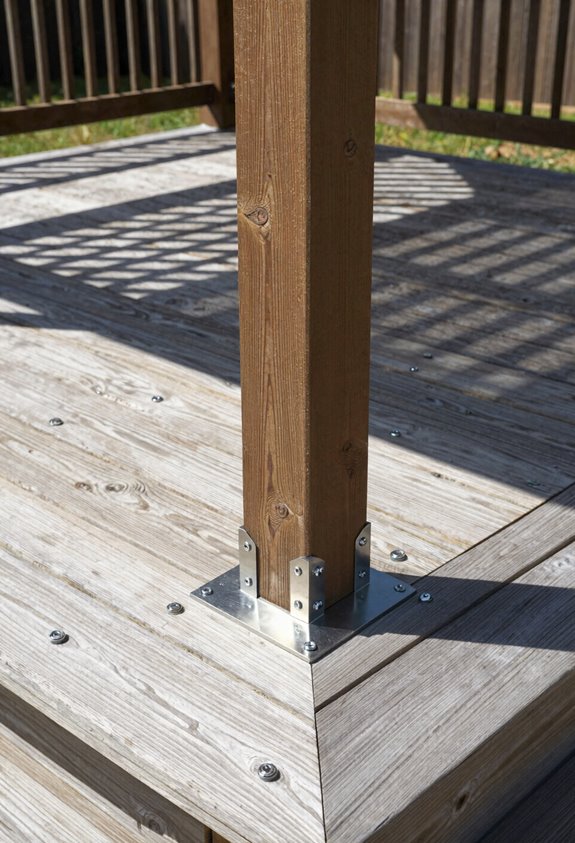
Once I’ve confirmed my deck won’t fold like a cheap lawn chair under the load, I turn to the real challenge: keeping that gorgeous hardtop gazebo from taking flight during the first thunderstorm. I’ve learned that secure anchoring demands drilling lag bolts directly into joists, never into flimsy floorboards that’ll splinter like kindling. When my gazebo legs missed the joist spacing by three maddening inches, I added blocking between joists, problem solved in twenty minutes with scrap 2x8s.
Lag bolts into joists, never flimsy floorboards—when alignment fails, twenty minutes of blocking solves everything.
Here’s my battle-tested approach:
- Drive lag bolts into structural joists with pre-drilled holes, using stainless steel hardware to dodge rust stains
- Add blocking between joists when alignment fails
- Match anchors to gazebo weight; my 800-pound structure demanded ½-inch concrete anchors
- Select brackets rated for outdoor loads
- Verify local codes before your first hole
Which Deck Types Need Extra Reinforcement?
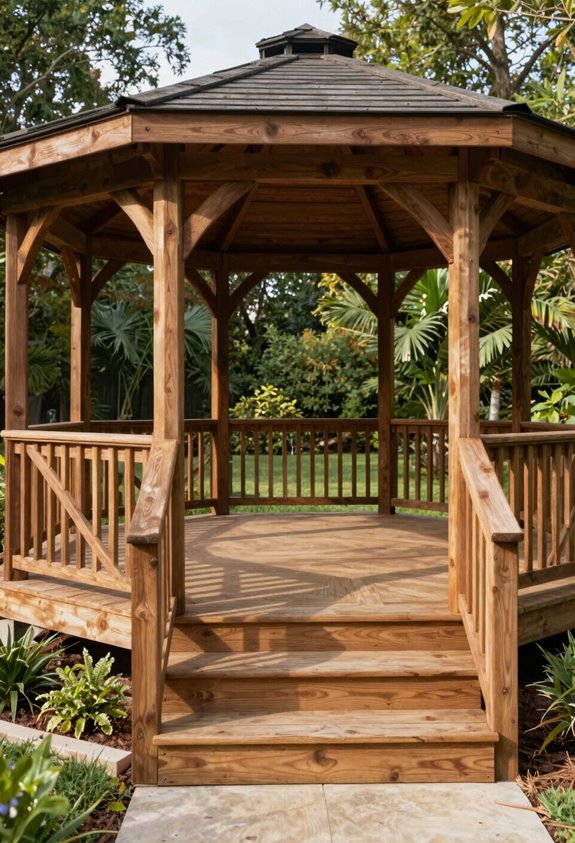
Where exactly your deck meets the ground, or doesn’t, determines whether you’re hosting summer dinners or filing insurance claims. I’ve learned deck type (ground-level vs floating) dictates my reinforcement methods from the start.
Ground-level decks give me the most forgiving foundation; their solid, uniform load path means I’m rarely scrambling for extra deck reinforcement. Raised decks are another beast entirely: those cantilevered spans and uneven settling demand added bracing, thicker lumber, and creative problem-solving. I’ve watched floating decks shift like restless sleepers, so I verify structural soundness before trusting even weight capacity calculations.
Joist spacing and beam thickness tell me everything about anchoring into joists properly. My gazebo becomes a kite in midwinter without it. I always counter wind uplift by securing directly to structural support elements, never floorboards. Measuring twice beats explaining flying gazebos to neighbors once.
Wood, Composite, or Concrete: Choosing Your Mounting Surface
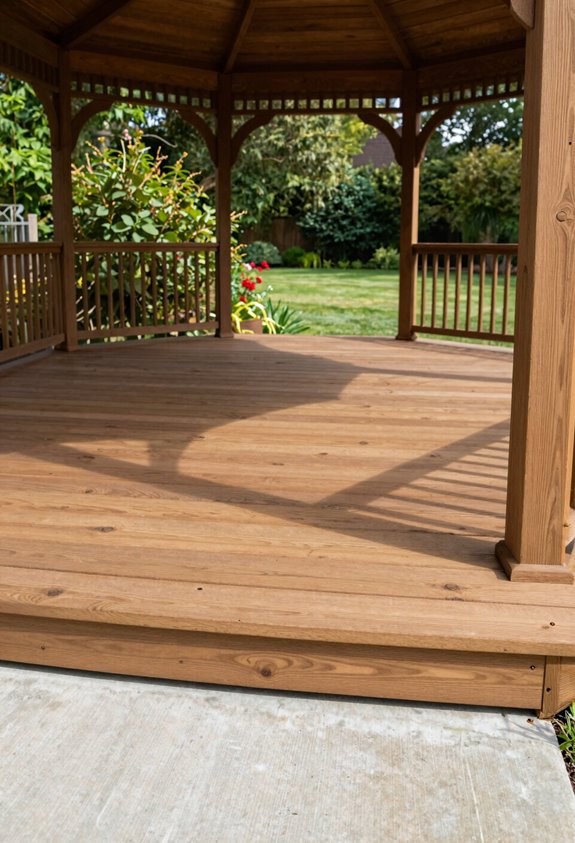
Why does the surface beneath my gazebo matter so much? I’ve learned the hard way that your mounting surface determines whether your structure stands gorgeous or becomes a gorgeous ex-lawn disaster. Let me break down what actually works.
Wood deck: I drill lag bolts through brackets directly into joists, never floorboards; those 2x6s can’t handle the load weight alone.
Composite deck: I use specialized anchoring systems; the material resists rot but needs careful planning for heavier gazebo frames.
Concrete patio: I mount with expansion bolts for permanent stability, though my wife hates that we can’t rearrange later.
Avoid loose soil, grass, or slopes without proper foundation work; I’ve watched structures tilt after spring rains.
Surface choice dictates your anchoring options and long-term peace of mind.
Maintaining Deck Safety After Gazebo Installation
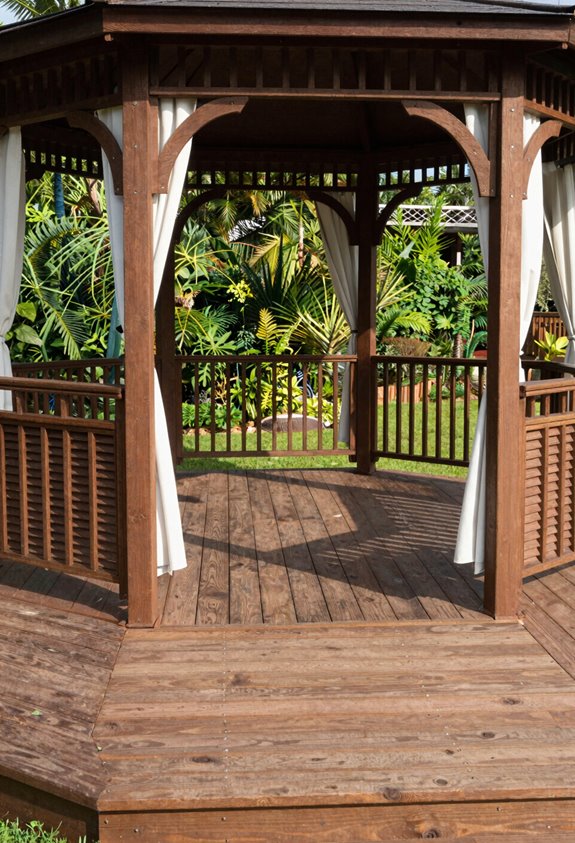
How exactly does a deck transform from solid footing to hidden hazard once you’ve bolted down that gazebo? I’ve watched it happen; neglect turns that gorgeous ex-lawn structure into a liability.
First, I verify my deck’s load capacity, confirming it handles 40–50 psf plus the gazebo’s dead weight. Anchoring to joists with half-inch lag bolts—not decking boards—secures against wind uplift, distributing forces through structural integrity, not flimsy planks. I inspect quarterly for sagging, cracks, or fastener loosening; that added mass accelerates wear faster than you’d expect.
Fastener corrosion prevention matters: stainless steel hardware prevents rust stains on my cedar, though it costs triple the galvanized stuff. Maintenance after installation means seasonal re-evaluations, especially post-storm. Weight distribution and vigilant inspection keep my elevated retreat safe, compliant, and standing.