I’ve grilled enough Solanum tuberosum to fill a gorgeous exlawn, and I’ve learned that waxy varieties, your reds, Yukon Golds, anything with thin, buff-yellow periderm, beat starchy russets unless you’ve got the knife skills for wedges. Two tablespoons oil per pound, one teaspoon salt, seal that foil loosely so steam escapes or you’ll get a sad, soggy mess. Fifteen minutes, flip, five to ten more.
But here’s the thing about that “medium-direct heat”: my first attempt torched the alliums to carbon while the centers stayed practically raw, and I’ve got the USDA Zone 7 char marks to prove it. The real trick starts before you even light the grill, and it’s not what most recipes tell you.
Choose the Best Potatoes for Grilling
Why do so many grillers end up with potatoes that fall through the grates or emerge with raw centers and scorched skins? I’ve been there, and I’ve learned it starts with choosing wrong.
Choosing the wrong potato is where most grillers go wrong—I’ve been there.
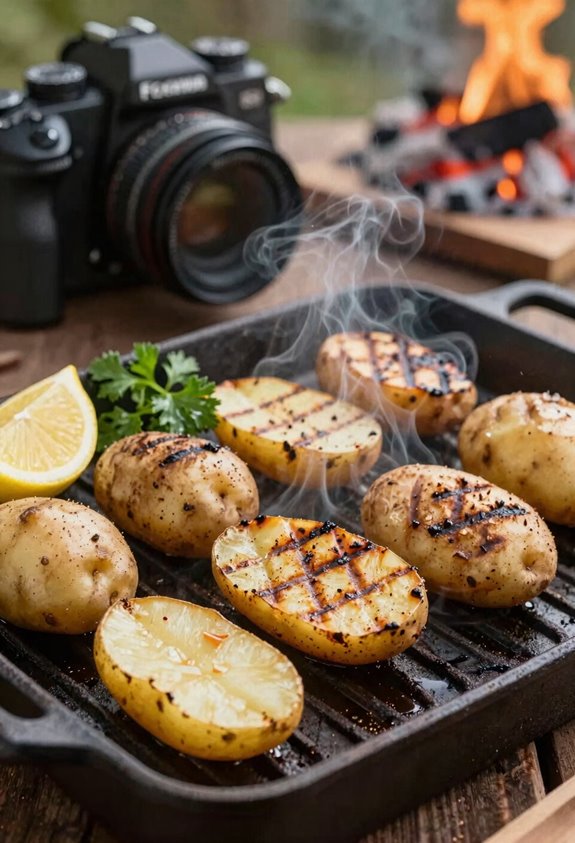
I reach for red potatoes or Yukon Gold when I want that smoky flavor without the drama. Their waxy texture holds together on the grill, unlike mealy russet potatoes that demand special handling. When I do grab russets, I cut long potato wedges; nothing else survives direct heat.
For thin skins and quick cooking, I’m grabbing those gorgeous baby new potatoes, often tossed in foil packets when I’m feeling lazy. I’ll parboil halved potatoes when I want crisp outsides and fluffy interiors. Larger spuds? Half-inch rounds or they won’t finish.
Potato variety dictates technique, and technique keeps us from joining the charred-potato club nobody wants admission to.
Prep and Slice for Even Cooking
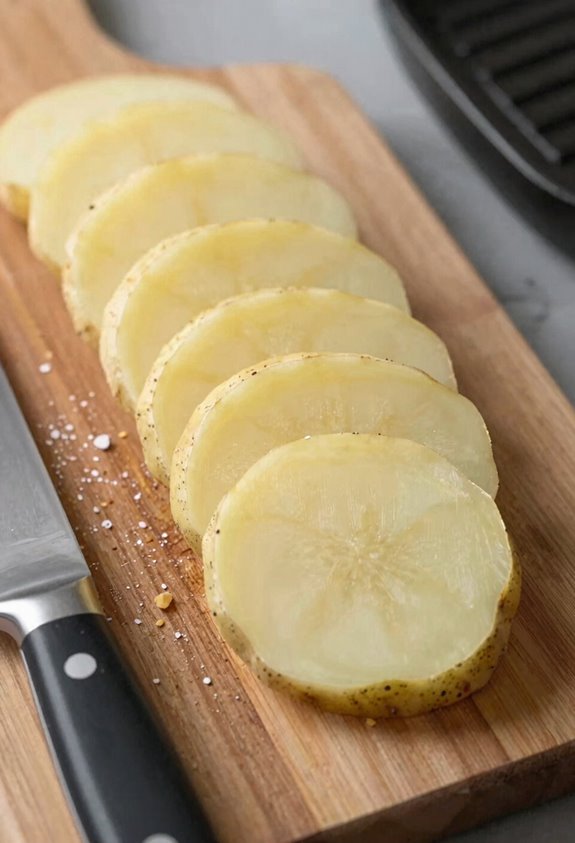
I’ve learned the hard way that a potato’s destiny is sealed at the cutting board, not the grill. When I prep for grilling, I reach for waxy varieties: small reds, yellows, or Yukon Golds that won’t crumble under heat.
Size dictates my approach: tiny potatoes get halved; larger ones demand quarters or 1/4-inch wedges for even cooking. I’ve abandoned hope for raw russets on open flame.
Here’s my field-tested protocol:
- Parboil dense specimens 5 to 15 minutes (90 seconds suffices for marble-sized)
- Slice uniformly so no wedge lags behind
- Boil until a knife meets slight resistance
- Coat immediately with olive oil and seasoning before surface dries
This prep changes grilling from gamble to guarantee. Your fork will confirm success.
Toss With Oil, Salt, and Herbs
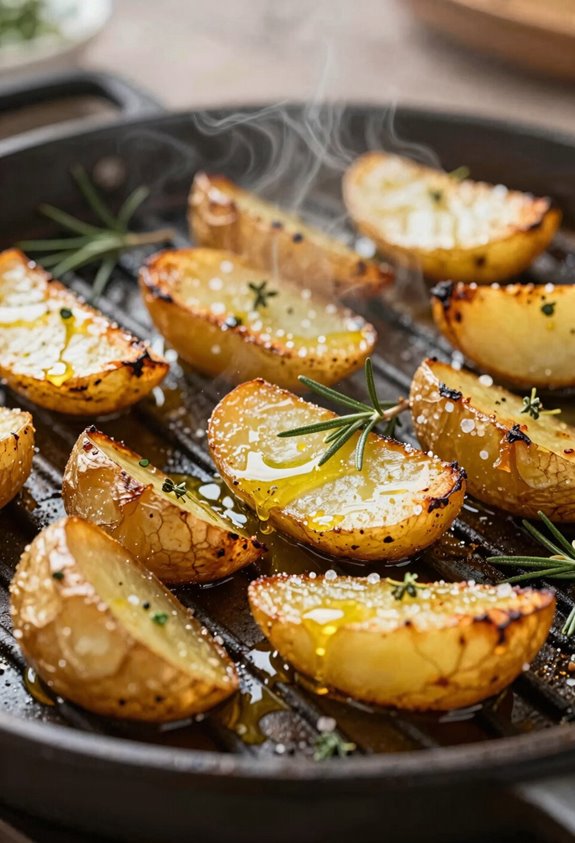
Once the potatoes leave the cutting board, they need armor. I toss waxy potatoes, small reds or yellows, their firm Solanum tuberosum flesh good for surviving live fire, with olive oil, coating every centimeter to prevent grill sticking and encourage Maillard browning. Two tablespoons oil per pound, no skimping. Kosher salt follows, one teaspoon per pound, generous enough to penetrate during grilling; I’ve learned stingy seasoning yields bland grilled potatoes. Garlic powder joins for savory depth, onion powder too, if I’m feeling it.
Fresh herbs, parsley, dill, chives, get reserved; I’ll toss those after cooking for bright aroma, not charred ruin. This preparation bonds us in backyard ritual, turning tubers into something worthy of the flame.
Build Your Sealed Foil Packet
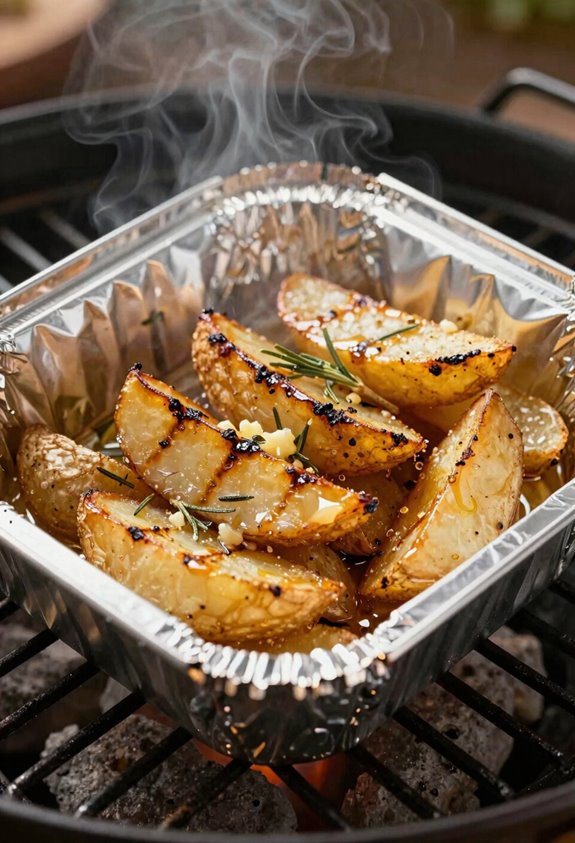
A foil packet is your potato’s temporary greenhouse, and I build mine with the fussiness of someone who’s scraped too many charred tubers off grates. I’ve learned that double-layering foil prevents tears that doom your dinner to the flames.
Here’s my ritual for foolproof foil packets:
Spread two overlapping sheets into a single layer on a baking sheet before adding potatoes. Toss your sliced tubers with olive oil and seasoning: kosher salt, garlic powder, smoked paprika, until every surface glistens. Arrange in a single layer, then fold edges into a sealed packet with headspace for steam circulation. Transfer to medium-high heat for fifteen minutes, then open and finish by checking tenderness with a fork.
This method delivers tender potatoes without the gorgeous ex-lawn of your grill becoming a graveyard.
Grill the Packet Over Medium-Direct Heat, Then Flip, Finish, and Serve
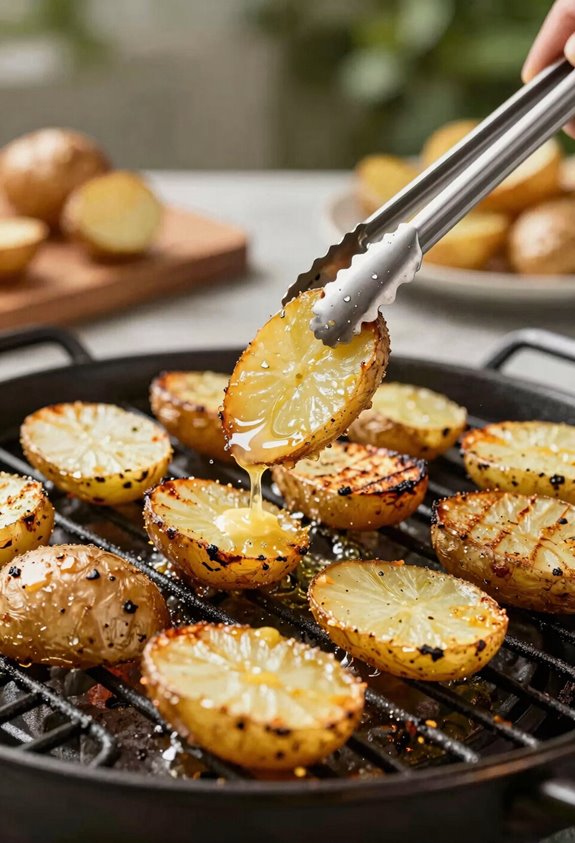
With your foil packet sealed and seasoned, you’re ready to commit it to the flames. I lay my foil packets on the grill over medium-direct heat and step back, letting the tubers do their thing for fifteen minutes; patience now means golden glory later.
When that first side turns deeply golden, I flip the packets, re-cover, and wait another five to ten minutes until the potatoes yield to gentle pressure. Here’s where I confess: I’ve rushed this, poked too early, served crunchy chunks nobody wanted. Now I test doneness properly, sliding a fork through to verify tenderness all the way through.
If they’re not quite there, I uncover to finish cooking; dry wit, drier heat; and serve when ready. Grilled potatoes, done right, reward the vigilant.