A patio set is a promise you’re making to your future self, and I’ve broken enough of those promises to know which woods keep theirs. Teak and eucalyptus both arrive looking gorgeous, but one will betray you by year three if you choose poorly.
I’ve watched $800 eucalyptus chairs warp into modern art installations across three humid summers, while my neighbor’s teak loungers, untouched for fifteen years, settled into that silver-gray patina everyone claims to want.
The difference isn’t just money upfront; it’s whether you’ll spend your weekends oiling furniture or actually using it. I’ll walk you through the five factors that matter, starting with the math nobody wants to do first.
What Will You Pay for Teak vs. Eucalyptus: Upfront and Over Time?
How much will your outdoor seating actually set you back? I’ve learned the hard way that Teak cost stings upfront, I’m talking 30-40% above eucalyptus price for equivalent sets, yet that premium reflects real value lurking beneath the surface.
The upfront cost of my eucalyptus bistro set looked gorgeous on my exlawn until year three, when I measured the oiling/sealing cycles: twice-yearly applications, 2-3 hours each, plus replacement of warped slats. For total cost of ownership, factor maintenance meticulously. Teak demands minimal fuss; its natural oils provide built-in decay resistance, while eucalyptus begs for protection.
Durability translates directly to lifespan. I’ve watched teak survive fifteen years in USDA zone 8b with passive neglect, its silvery patina masking rock-solid integrity beneath. Choose wisely; your future self handles the bill.
Which Wood Lasts Longer in Harsh Weather?
Sticker shock fades, but replacement bills arrive like clockwork. I’ve learned this the hard way with outdoor furniture, and here’s what separates survivors from compost-bound casualties.
Teak dominates harsh weather through sheer biological engineering. Its natural oils, concentrated at 4-6% by weight, create decay resistance that laughs off monsoons, snow loads, and that gorgeous exlawn sprinkler I forgot to reposition. I’ve seen century-old teak benches in USDA Zone 10b performing like teenagers.
Eucalyptus puts up a respectable fight with comparable oil content, but demands constant maintenance: annual oiling, religious sealing, to preserve weather resistance. Skip one season, and durability crumbles.
For longevity without babysitting, Teak wins. Its weather resistance spans generations with occasional refinishing, while Eucalyptus requires vigilant care to approach similar lifespans. Pay more once, or pay repeatedly.
How Do Teak and Eucalyptus Look as They Age?
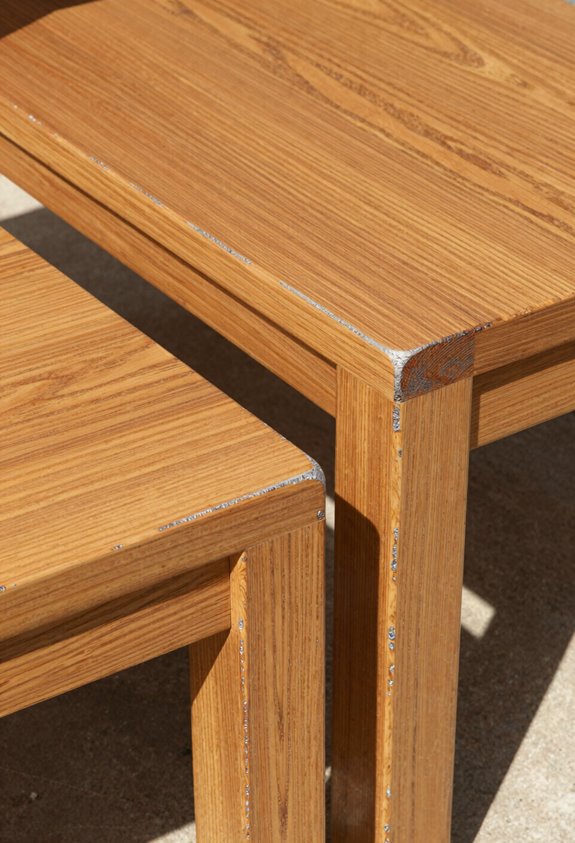
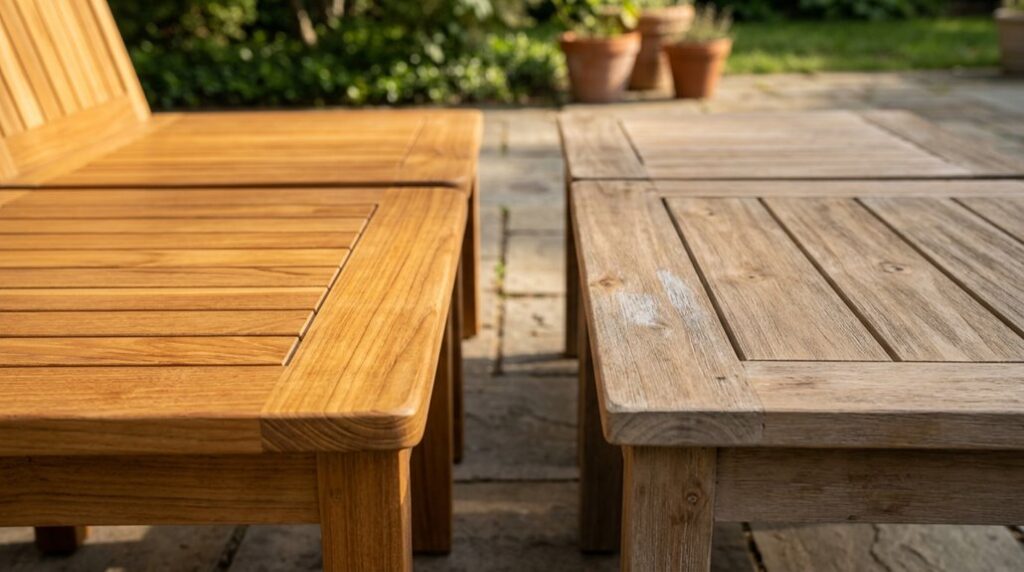
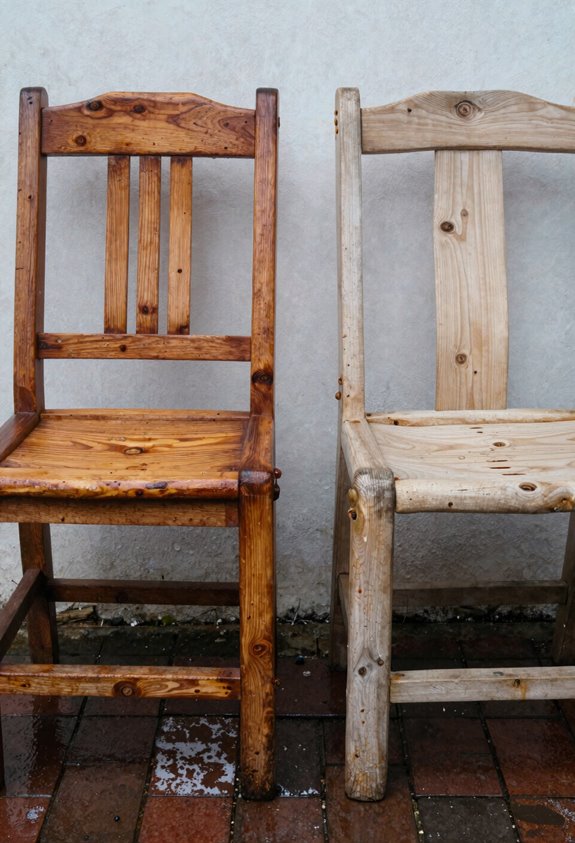
Where does the beauty go when the newness fades? I’ve watched both woods surrender to time, and honestly, it’s where their real character emerges. Teak aging color begins that gorgeous golden-brown, then drifts toward a silver-gray weathered patina as natural oils oxidize. Eucalyptus aging color starts reddish-brown and pushes into a deeper, less golden darkening tone.
The patina progression differs: teak stays smooth and slightly oily, while eucalyptus turns matte and drier in surface texture. An oil-treated finish preserves teak’s warmth, but sealant effect on eucalyptus creates unpredictable mottling. I’ve learned this through three humid Virginia summers and one catastrophic deck experiment.
| What You Start With | What Time Gives You | What You Can Control |
|---|---|---|
| Golden-brown teak | Silver-gray weathered patina | Oil-treated finish preserves warmth |
| Reddish-brown eucalyptus | Dark, uneven weathered brown | Sealant effect determines consistency |
| Natural oils in both | Gradual or chaotic patina progression | Surface texture changes regardless |
How Much Maintenance Do Teak and Eucalyptus Actually Need?
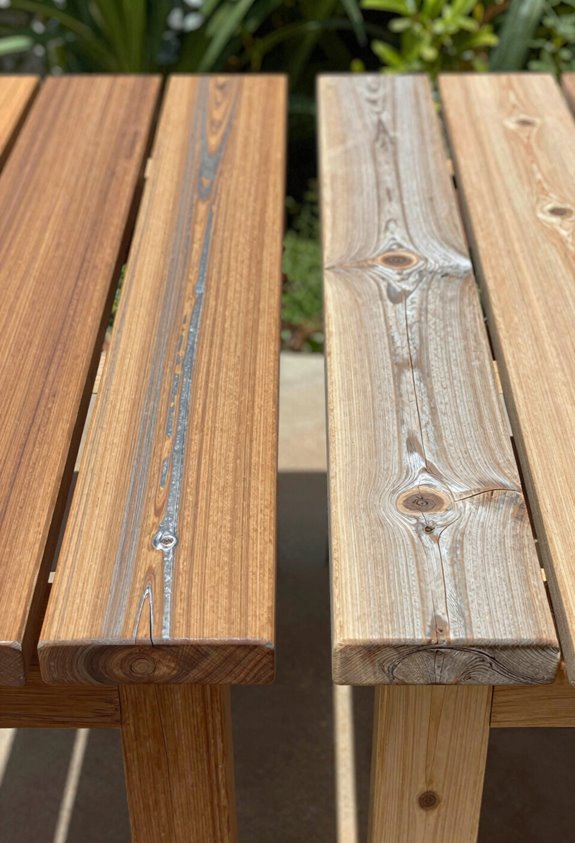
Their silver-gray transformations might look similar at fifty paces, but keeping them that way, or not, separates the lazy gardener from the committed.
I’ve learned teak maintenance barely registers on my chore chart. Those natural oils do the heavy lifting; I just handle periodic cleaning and occasionally wrestle with oiling when I’m feeling fancy. Skip it, and weathering takes over. No durability penalty, just character.
Eucalyptus maintenance demands more marriage counseling. I’ve clocked annual sanding at roughly two hours per chair, plus sealing every season if I want color retention. Let it silver, and you’re still chasing surface finish touch-ups more often than teak.
Both woods prefer shade and sensible cleaning schedules, but eucalyptus punishes neglect with brittleness. Choose your commitment level honestly.
Which Wood Is Right for Your Climate?
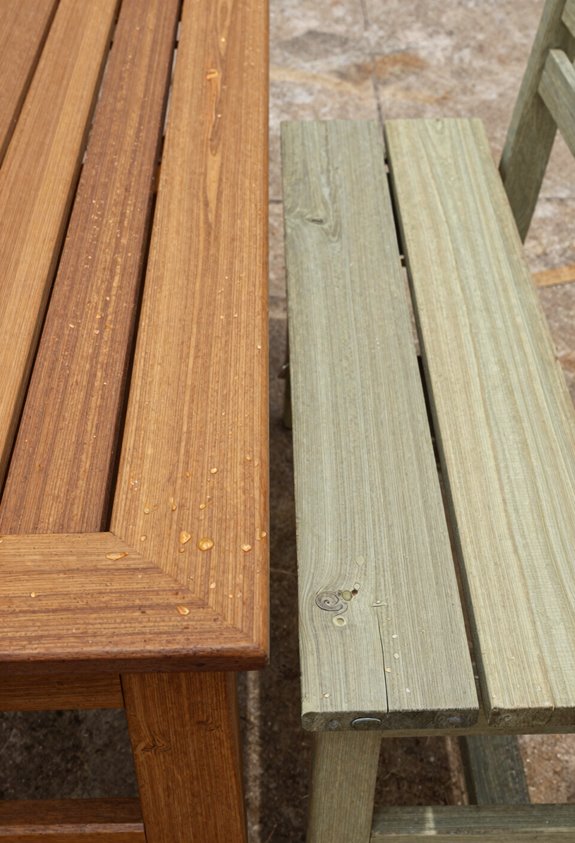
How severely your local weather misbehaves will settle this debate faster than any showroom sales pitch. I’ve watched both woods suffer in zones where humidity laughs at seals and sprays.
Here’s what my rotted samples taught me:
- Teak dominates seaside and tropical zones, its natural oils create built-in moisture resistance without my help, delivering decades of decay resistance even when I neglect it.
- Eucalyptus demands commitment in wet climates, I’ve learned to reapply finish every 18 months or kiss structural integrity goodbye.
- Dry climates level the field somewhat, though I still factor maintenance into true cost, since Eucalyptus cracks without protection while Teak shrugs.
For climate suitability, calculate your labor honestly. That “budget-friendly” Eucalyptus outdoor furniture becomes expensive fast when you’re sanding and sealing annually. My Teak pieces? Gorgeous ex-lawn survivors from 2003.