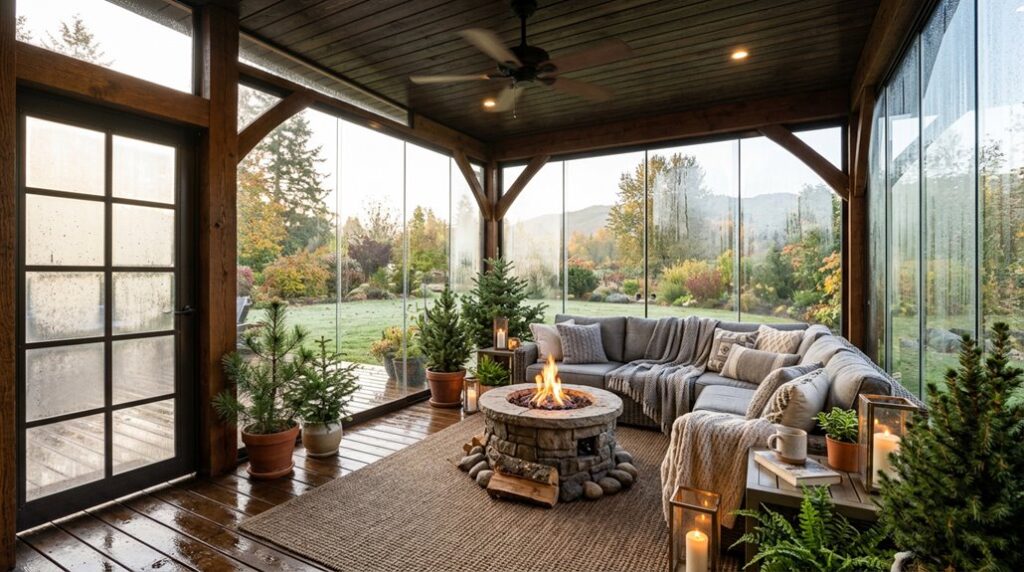
I’ve enclosed five patios over twenty years in zones 6b through 8a, and I’ve learned that “year-round” means wildly different things depending on whether you’re fighting 20°F snaps or just persistent drizzle. Clear vinyl on pressure-treated frames costs about $200 and buys you December usability in zone 7a, though you’ll wrestle the panels twice yearly.
Screens with motorized convertible panels run $8 to $12 per square foot, pricey until you calculate replacing three torn DIY versions. Three-season rooms trap heat above 40°F; double-pane glass nudges them toward four-season territory without the heating bill. True four-season enclosures demand insulated glass and rolling panels, but they’re the only option when your rosemary standards must survive January. Choose wrong and you’ve either wasted money on overkill or built a solar oven you’ll abandon by August.
Which Patio Enclosure Fits Your Budget and Climate?
When I’m standing on my back patio in January, watching my breath fog while my potted rosemary shivers in its terracotta prison, I start wondering exactly how much I’m willing to pay for the privilege of forgetting what season it is.
I’ve learned that choice factors; budget, climate, and desired year-round use; determine which patio enclosure fits your life. A screen room costs least, offering insect protection and airflow, though it won’t save your rosemary in USDA zone 6.
Three season rooms provide weather protection with single- or double-pane glass, but skip climate control, making them transitional solutions. Four season rooms deliver heated, cooled comfort with insulated glass. Solariums maximize light at premium cost. Match your budget to your climate reality, not your gorgeous exlawn fantasies.
Clear Vinyl Panels: Affordable DIY Seasonal Enclosure
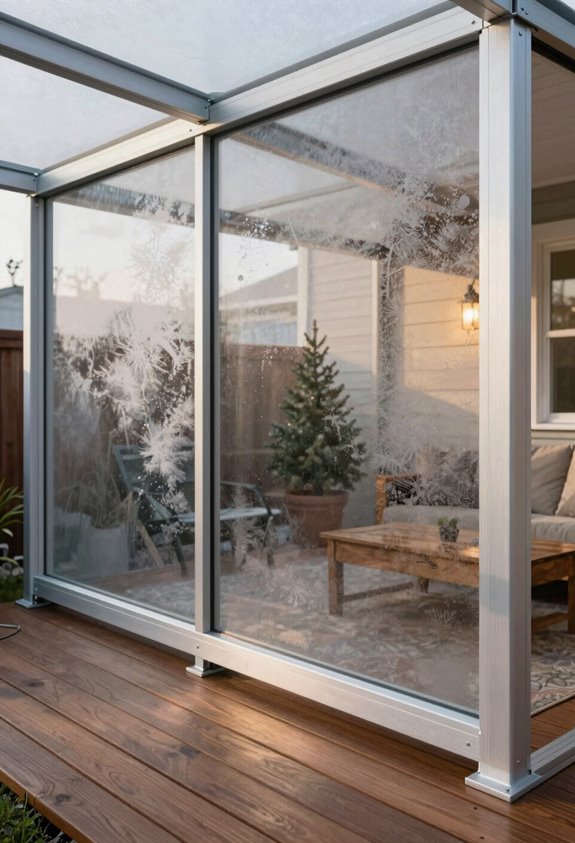
The cheapest way I’ve found to cheat winter involves a material more commonly associated with shower curtains and deli meat storage. I’m talking about clear vinyl panels, my go-to affordable patio enclosure for year-round use without the sunroom price tag.
These lightweight vinyl tarp panels hang with grommets, zip ties, and simple frames I’ve cobbled together from pressure-treated 2x4s. For roughly $200 and a Saturday afternoon, you’ll build weather protection that blocks sleet and wind while sunshine streams through. It’s a DIY enclosure that changes your space into a seasonal enclosure without permits or contractors.
I swap mine out come April, storing the rolled panels in my garage until frost threatens my hardy fuchsias again. The adaptability suits my zone 7a climate perfectly; quick transitions between open-air and enclosed configurations as temperatures swing.
Screened Patio Enclosure With Convertible Panels
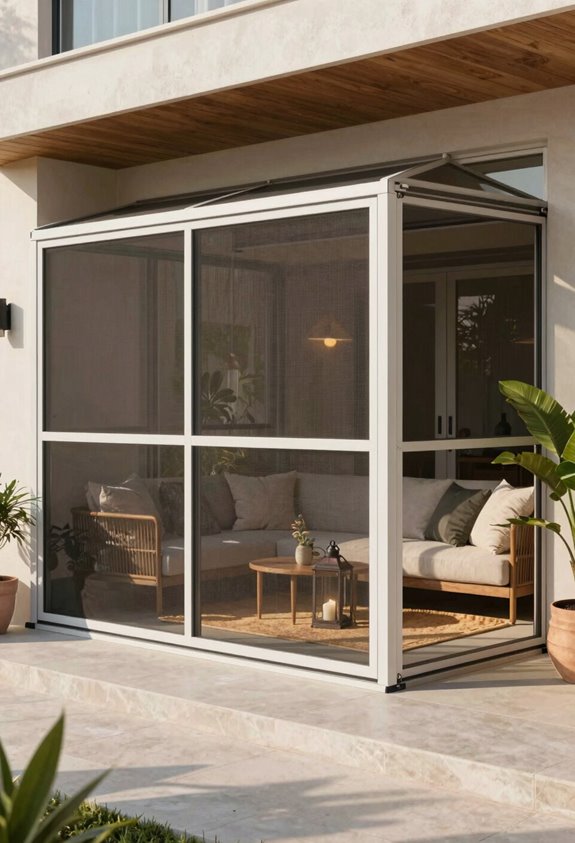
Why settle for either a screen room or a sunroom when you can cheat the system and get both? I’ve built my share of screened patio enclosures, and convertible panels changed everything for my exterior living space.
You install black aluminum mesh on fixed frames for baseline insect protection, then add retractable enclosure sections, manual or motorized panels, that slide away when you want open air. This weather adaptable setup costs roughly $8-12 per square foot, making it an affordable patio enclosure that doesn’t sacrifice flexibility.
The black aluminum mesh disappears visually; I’ve had guests walk into it. For year-round outdoor living in USDA zones 7-10, this hybrid delivers. My motorized panels failed once during a storm, so get the warranty.
Three-Season Room: Weather Protection Without Heating
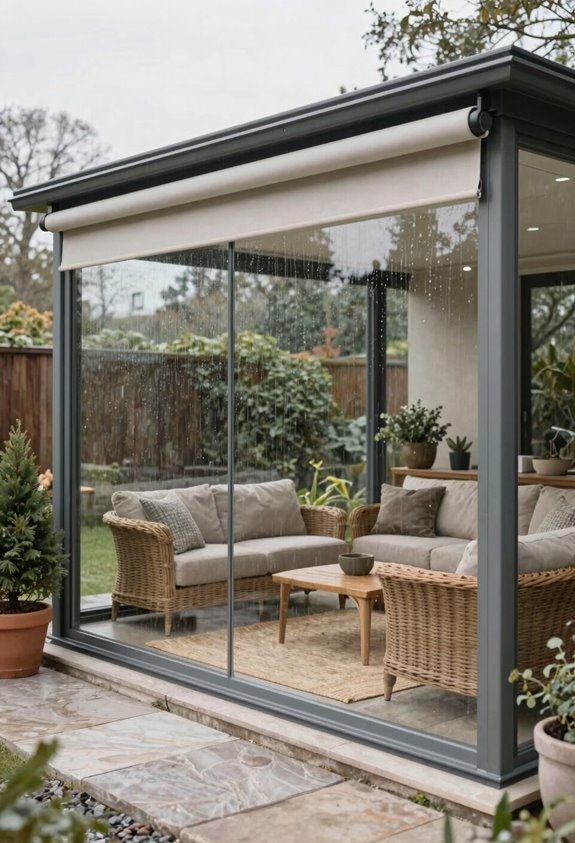
How much enclosure do you actually need before you’re just building a second living room? I’ve found my sweet spot in the three-season room, that Goldilocks zone between raw patio and climate-controlled cave.
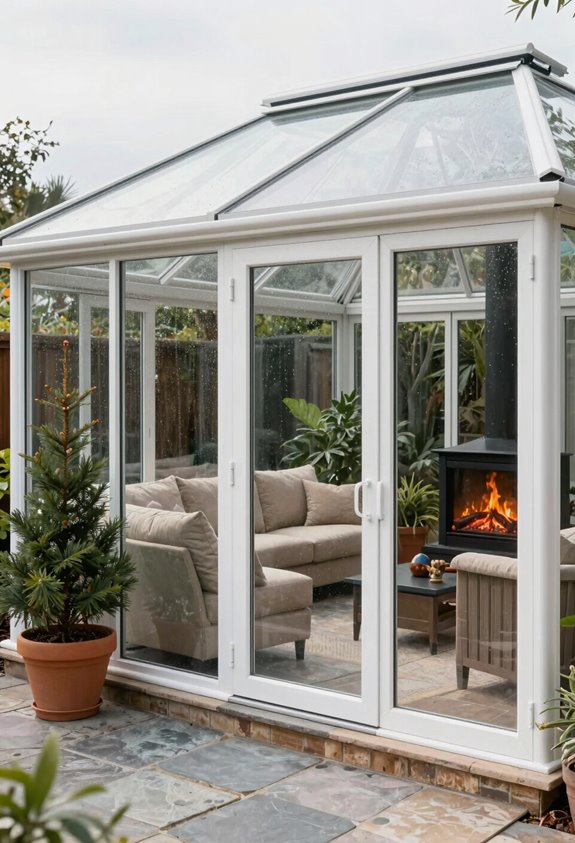
This patio enclosure delivers weather protection without the heating bills that’d make my accountant weep. I chose single-pane glass for my USDA Zone 7b setup. Double-pane glass would’ve pushed costs toward four-season territory, and honestly, my tomatoes don’t need that much coddling. Climate considerations matter: below 40°F, I retreat indoors like any sensible gardener.
My three-season room extends outdoor living space from March through November, an affordable enclosure that doesn’t pretend to be something it’s not. It’s shelter with soul, not a hermetically sealed pod.
- Hear rain drum on glass while you stay dry; nature’s membership has privileges
- Watch monarchs pause on your verbena through walls that breathe with the seasons
- Join the tribe of practical dreamers who refuse to pay for January tomatoes
Four-Season Patio Enclosure: Climate-Controlled Year-Round Use
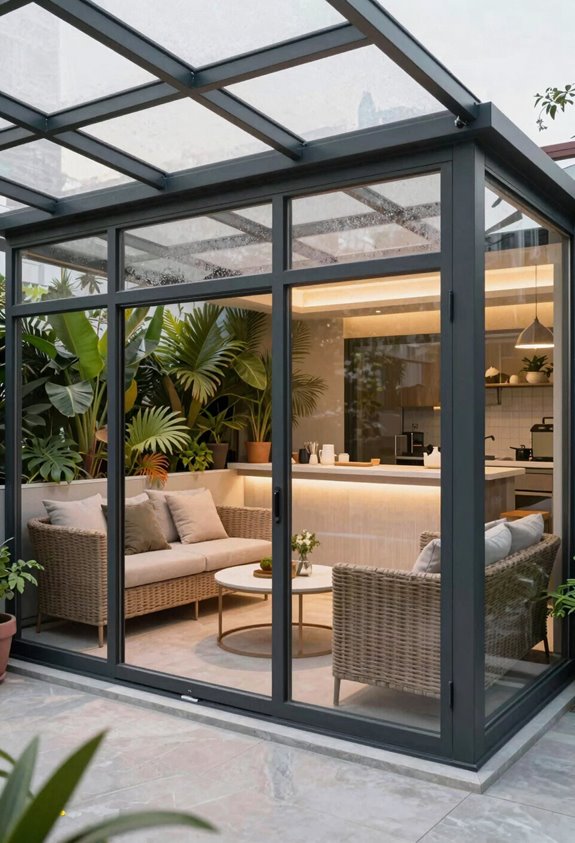
Sometimes I want January tomatoes, and I’m willing to pay for the privilege. That’s exactly why I’ve invested in Four Season Rooms, my climate-controlled sanctuary where year-round use isn’t marketing fluff but measurable reality.
My patio enclosure features glass walls with rolling panels and double-pane insulated glass that shrugs off 20°F nights. I upgraded to Comfort-Gard PLUS for superior energy efficiency, and my heating bills stayed reasonable even during last February’s polar vortex (USDA Zone 6b, if you’re tracking). The aluminum frames resist rust while maximizing that gorgeous exlawn view I converted into full living space.
Yes, this costs more than three-season setups. But comprehensive weather protection means I’m seeding tomatoes in January while neighbors browse seed catalogs. The climate-controlled comfort pays dividends in usable square footage, and bragging rights.