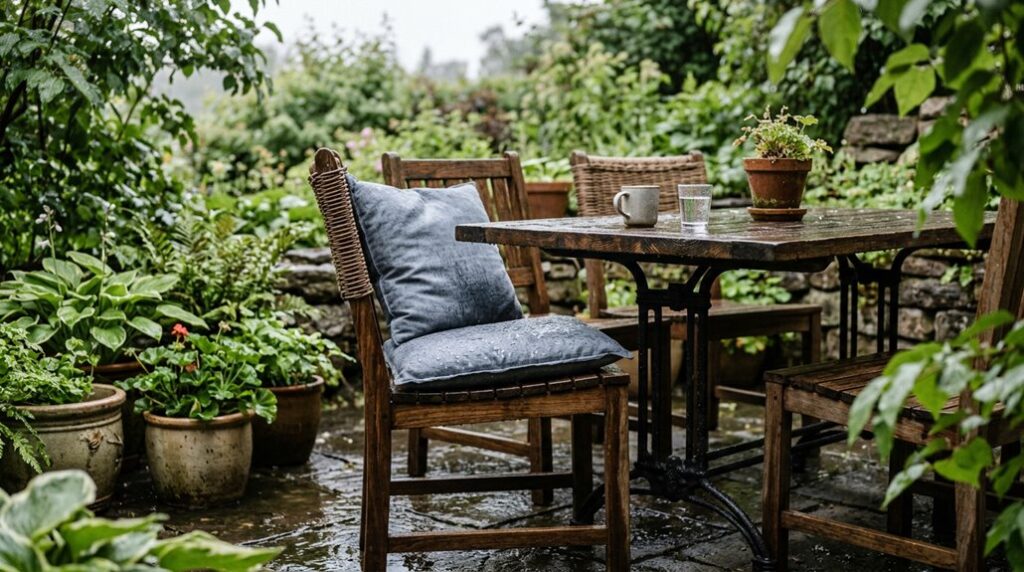
My teak lounge chair once sat through a monsoon like a stubborn tortoise refusing shelter, and I learned the hard way that “outdoor” doesn’t mean “bulletproof.” I’ve watched $400 cushions turn into science experiments and aluminum frames develop personalities, specifically, the orange weeping kind.
The real question isn’t whether your furniture *can* get wet, but how fast it recovers before the mold sets up housekeeping. I’ve got the data from five USDA zones and one spectacular failure in zone 10b that’ll make you rethink your cover strategy.
Can Outdoor Furniture Get Wet?
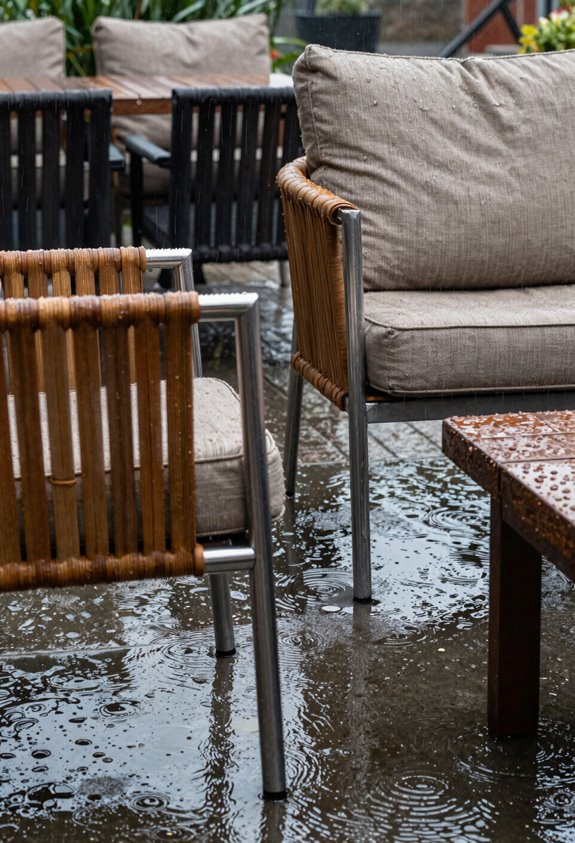
How often have I dragged cushions inside at the first spit of rain, only to learn I was fussing over furniture built precisely for this?
I’ve since embraced weatherproof furniture, and you should too. Synthetic wicker, HDPE resin, not the natural stuff my grandmother’s porch rotted through, laughs at downpours. Pair it with cushions in solution-dyed acrylic, and you have moisture resistance engineered into every fiber. Quick-drying fabrics let rain bead and roll off rather than soaking in, while vented construction prevents that soggy-bottomed despair.
I’ve learned non-absorbent fills and breathable mesh panels dry my ottomans within two hours of summer storms. Skip this, and you’ll battle mold and mildew in the cushions’ foam cores by August. Proper weatherproof furniture means less hauling, more living outdoors.
Which Wicker Types Survive Rain (and Which Don’t)?
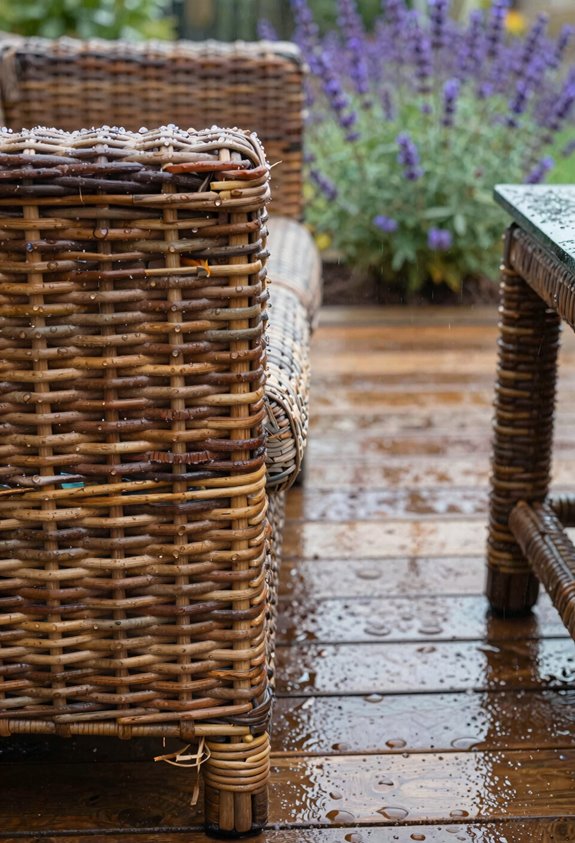
I’ve learned this the hard way: not all wicker plays nice with rain exposure. Natural wicker, gorgeous stuff, really, soaks up moisture like a thirsty sponge and rots within two seasons in USDA zones 7-10.
HDPE wicker, however, laughs at downpours. It’s water-resistant, not waterproof, but it’ll survive year-round abuse. Pair it with rust-resistant frames and quick-drying cushions, and you have furniture that actually earns its keep. I ruined a $400 natural set in one Portland winter; never again.
How Outdoor Cushion Fabrics Handle Rain and Drying
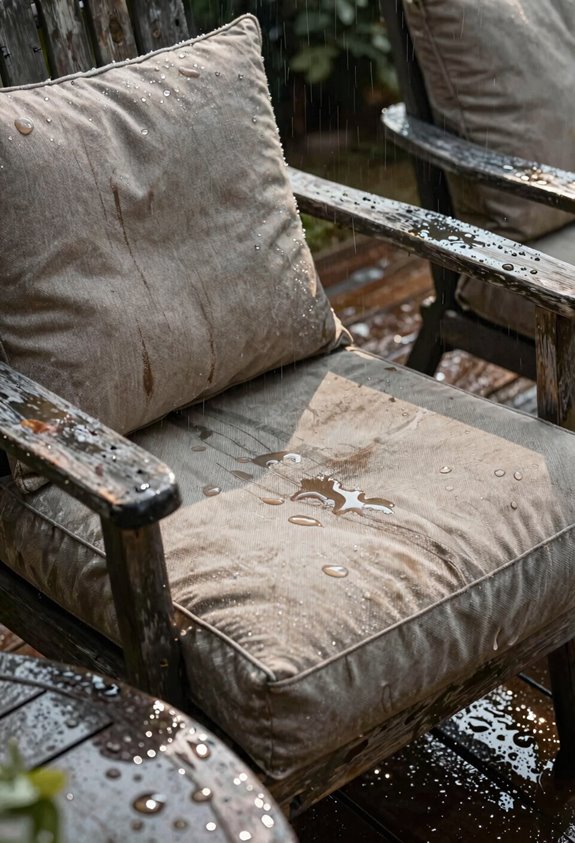
Why does one cushion dry before I’ve finished my coffee while another stays soggy through dinner? I’ve learned it comes down to fabrics and filling. Acrylic and Sunbrella cushions shed water like a duck’s back, hydrophobic, solution-dyed fibers bead rain and roll it off. Cotton and linen? They drink moisture deep into their fibers, turning my gorgeous exlawn seating into a sponge that takes forever.
The secret’s in the weave too. Tight, air-circulating construction accelerates drying, while compacted stuffing, think premium polystyrene beans rather than traditional sodden filling, prevents that squelch you feel when sitting on yesterday’s storm.
Properly aired cushions in sun and dry air? Back in service within 2–3 hours. Choose wisely, and rain becomes a minor inconvenience, not a day-ruiner.
Cover, Move, or Leave It: Your Rain Response Options
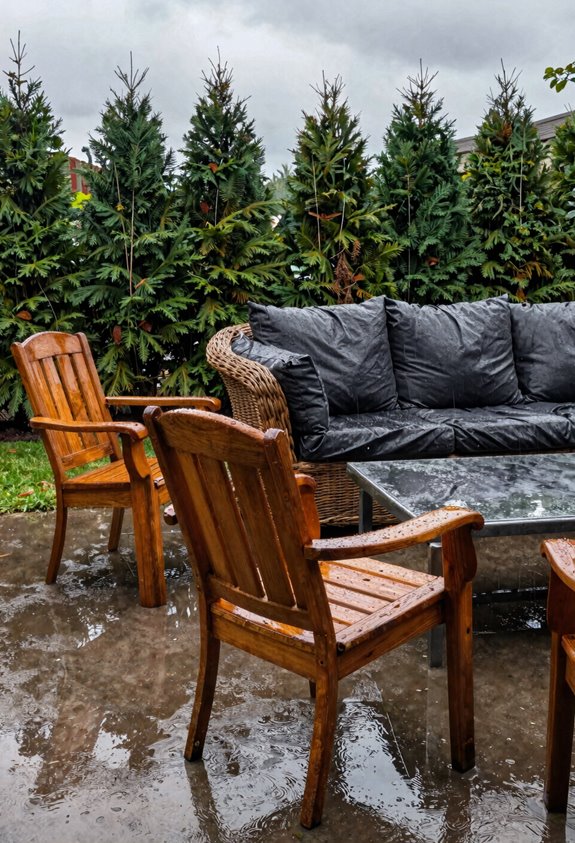
When storm clouds roll in, I’m standing on my patio doing rapid-fire math: drag six chairs through a sliding door, wrestle with a fitted cover, or let the rain do its thing?
I’ve learned that outdoor fabrics with water resistance give me options. Here’s my storm playbook:
- Cover up: Fitted covers deliver rain coverage and UV protection, extending cushion life significantly
- Move inside: For extended absences, I prioritize storage and drying in shaded, dry spaces
- Leave it: Quick-drying cushions with non-absorbent fillings handle light showers fine
- Dry thoroughly: Sun exposure prevents moisture and mold prevention failures
My HDPE wicker chairs laugh at drizzle, but I’m obsessive about drying cushions completely before any storage. Mildew waits for no one, especially not in my humidity zone 8a garden.
Your Outdoor Furniture Got Soaked: Now What?
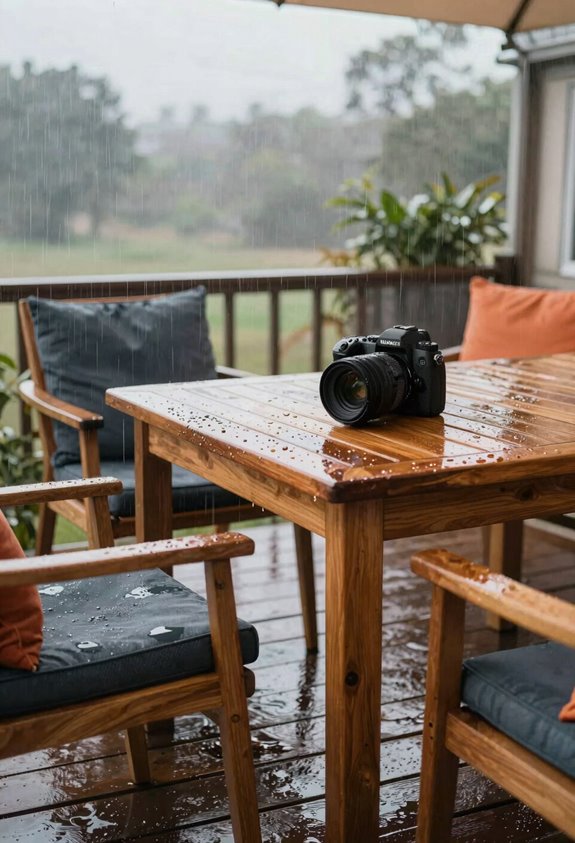
Rain’s aftermath finds me flipping cushions like pancakes, hunting for puddles that’ve pooled in the low spots where my solution-dyed Sunbrella meets its polystyrene filling. I’ve learned that quick-drying fabrics paired with non-absorbent fillings transform soggy afternoons into minor inconveniences rather than fungal disasters.
| What I Check | What I Do | How Long It Takes |
|---|---|---|
| Surface beading | Wipe away beaded moisture with a microfiber cloth | 10 minutes |
| Filling compression squeeze | Stand cushions upright, unzip slightly for airflow | 2–3 hours in sun |
| Hidden puddles in seams | Prop at 45° angle, porous side down | Full dry before storage |
My weatherproofing routine hinges on this: cushions dry fastest when I’ve got both ventilation and solar radiation working together. For mold prevention, I never store anything damp; that’s how my gorgeous ex-lawn lounge became a Penicillium petri dish in USDA zone 7b. Non-absorbent fillings shed water like a duck’s back, but puddling in seams still demands vigilance.
How to Stop Wet Outdoor Cushions From Growing Mold
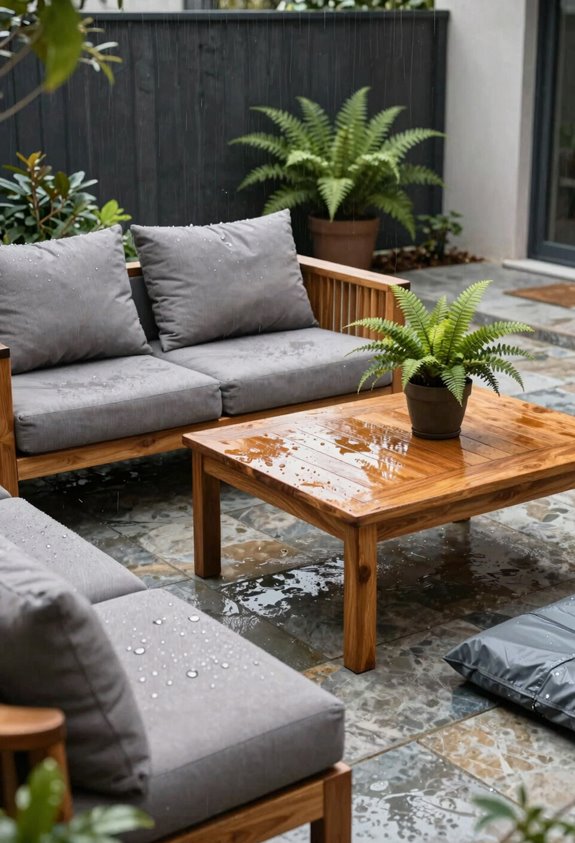
I’ve learned that preventing mold beats battling it, especially after watching my neighbor’s “waterproof” set turn into a science experiment in last July’s humidity. Here’s how I keep my cushions pristine:
Choose quick-drying fabric with non-absorbent fillings like premium polystyrene beans to outsmart moisture retention.
Battle moisture from the inside out: quick-dry fabrics and non-absorbent fillings outsmart humidity before it takes hold.
Eliminate puddles in tufted areas immediately; I tilt my cushions and blot excess water to accelerate drying.
Clean existing mold with mild soap, rinse thoroughly, and sun-dry in ventilated spaces; shade invites regrowth.
Delay storage until cushions read completely dry; I learned this lesson after unzipping a “dry” cover to find fuzzy betrayals.
My gorgeous ex-lawn furniture now survives Zone 7 humidity intact. Fabric choices matter more than promises.
When to Bring Wet Outdoor Furniture Inside: Season-by-Season Rules
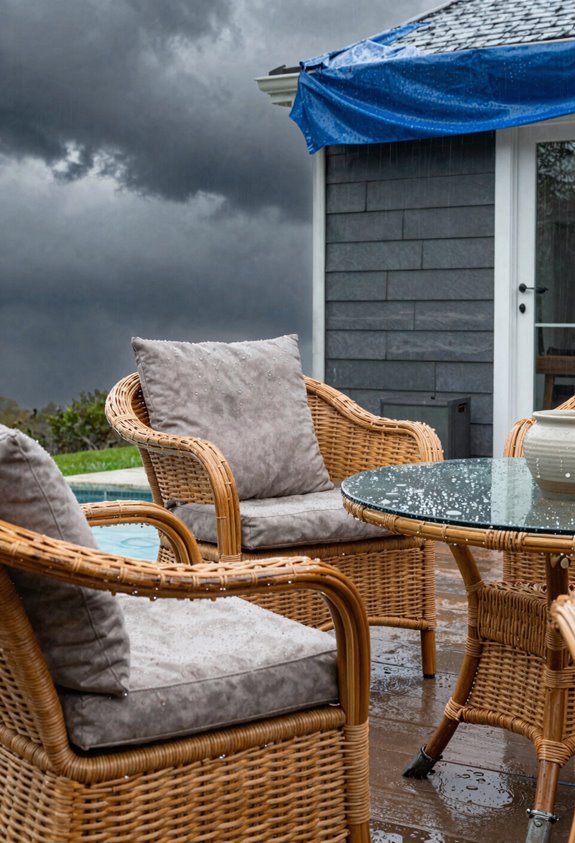
Why stare at an empty patio all winter when your furniture could thrive outside, or collapse spectacularly? I’ve learned seasonality the hard way, and I’m here to save you from my soggy mistakes.
Spring showers? I leave my HDPE wicker pieces out; they’re weatherproof, but I haul natural wicker to storage before moisture turns it to compost. Summer thunderstorms demand quick action: I grab outdoor cushions with non-absorbent fillings, shake off raindrops, and let them breathe rather than trapping dampness under covers.
Fall’s the tricky transition. I deploy breathable covers for extended dry spells, but anything staying put through winter needs elevation; concrete wicks moisture upward like a straw. My rule? Synthetic stays, organic goes, and when in doubt, I choose dry shaded storage over heroic exposure. Your furniture’s lifespan depends on these calls.