I’ve learned the hard way that my “waterproof” patio set covers weren’t so waterproof after machine-washing them hot; suds gushed out, the coating flaked, and I spent $40 on replacements that same season. Now I treat every cover like it might dissolve, because I’ve seen $200 custom covers turn into damaged yard waste in one cycle.
The label matters enormously, but when it’s faded or missing, which happens after two seasons in zone 7 humidity, you’re guessing blindly.
Check the Care Label First (or What to Do If It’s Missing)
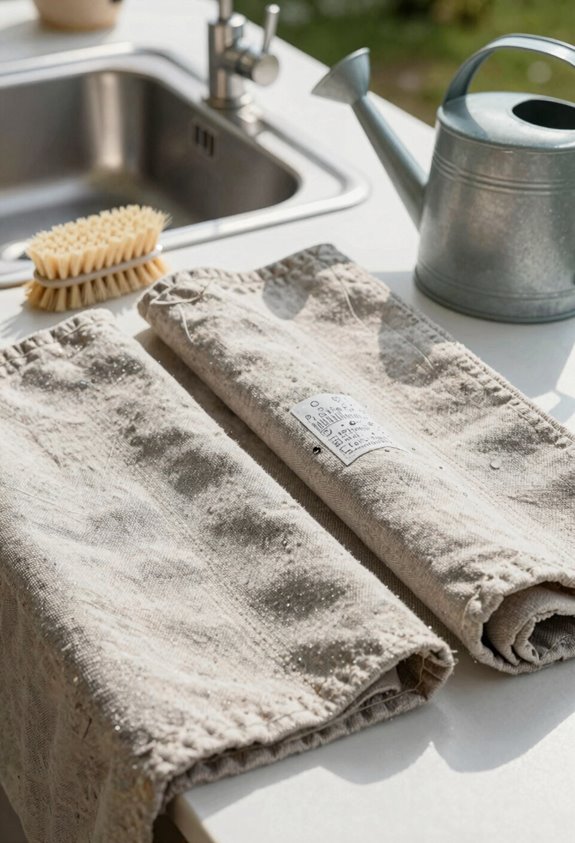
Before I drag a single cover to the washing machine, I always hunt down that care label like it’s a rare cultivar in a neglected garden center, because it is, in fact, the only map I’ve got. That tag tells me whether I’m cleared for machine wash, sentenced to hand wash, or restricted to spot clean only.
When the label’s gone, swallowed by sun and rain, I treat every cover as delicate fabric by default. I’ve learned this through casualties: taped seams peeling, waterproof backing flaking, elastic turning to regret. Hand washing in cool water with mild detergent becomes my safest protocol, no bleach, no heat, no guessing. Your cover’s hardware, buckles, vents, grommets, deserves that same caution. Trust the label when you have it; mimic its wisdom when you don’t.
Machine Wash Outdoor Furniture Covers (Only If the Label Says Yes)
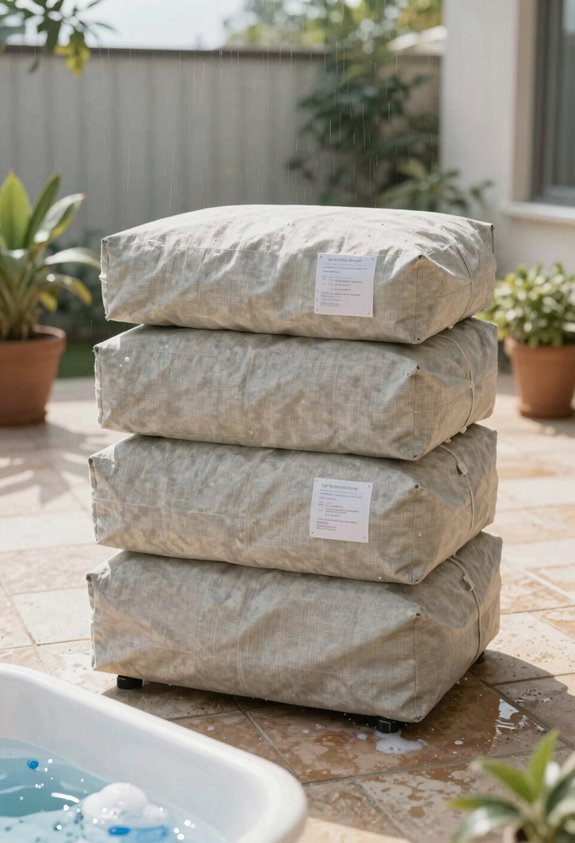
I always squint at the care label like I’m deciphering a ransom note before I’ll even consider tossing a cover in the washer, because I’ve learned the hard way that “water-resistant” and “machine-proof” are not synonyms.
When the label gives me the green light, I set my machine to a gentle or delicate cycle with cold water; anything hotter than 85°F starts breaking down those protective coatings faster than you can say “gorgeous exlawn.” I wash the cover solo, use mild detergent, skip the fabric softener entirely, and keep the spin speed low so I don’t end up with twisted straps and a seam that looks like it lost a fight with a wood chipper.
Check Care Label First
Where exactly do we start when our patio furniture covers look like they’ve hosted a fungal convention? I always flip that cover over and hunt down the care label first; it’s our roadmap to salvation or destruction.
| Care Label Says | What We Do |
|---|---|
| “Machine wash cold” | We’re golden; prep for machine washing |
| “Gentle cycle only” | Note that gentle cycle requirement |
| “Use mild detergent” | Stock up; no harsh chemicals here |
| Specific water temperature listed | Follow it exactly; I learned this the hard way |
If that care label’s gone AWOL or speaks in riddles, I treat the cover like a delicate orchid and hand wash it. Machine washing without permission? That’s how gorgeous exlawns become garage rags.
Gentle Cycle Settings
How exactly do we coax these bulky shields through the wash without turning them into expensive cheesecloth? I’ve learned machine washing outdoor furniture covers demands restraint, not brute force. When the care label gives you that green light, here’s my battle-tested protocol:
Select the gentle cycle; nothing else will do for these engineered textiles. Choose cold water to preserve those waterproof coatings I’ve watched melt away with heat. Add mild detergent sparingly; harsh chemistry degrades the fabric’s armor. Lower the spin speed to protect buckles and seams from torque stress.
I never crowd the drum, one cover only, or friction becomes your enemy. If your washer groans under the load, surrender to hand washing. Better a sore back than shredded polyester.
Hand Wash Outdoor Furniture Covers (The Safest Method)
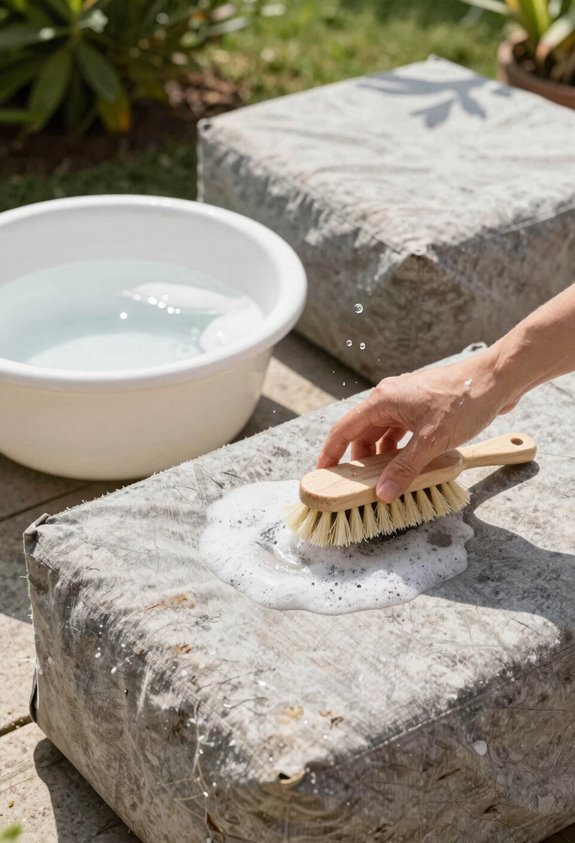
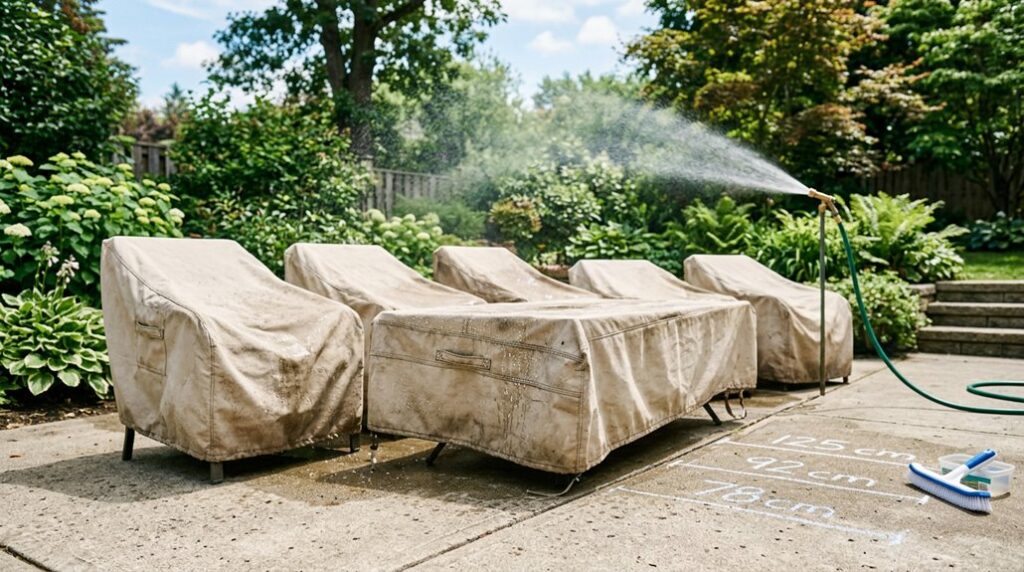
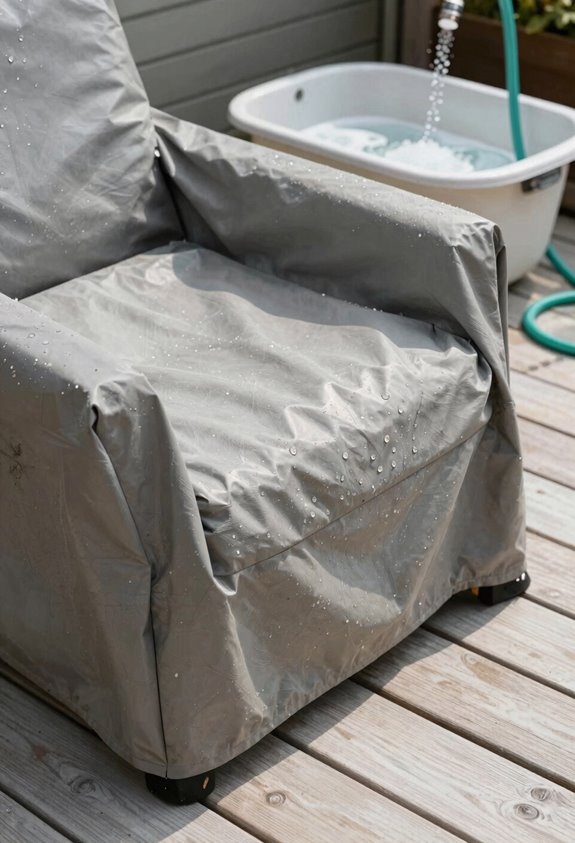
I’ll start by removing the cover and shaking out the botanical debris, those maple samaras and Norway spruce needles love the seams, then I’ll brush the corners with a soft-bristle hand brush before I fill my 15-gallon Rubbermaid with cool water, exactly 2 teaspoons of Seventh Generation, and begin wiping the panels with a microfiber mitt. It’s tedious, but after watching my $90 cover delaminate in a front-loader last spring, I don’t trust anything but my own two hands and a garden hose set to mist.
Preparation Steps
Why drag your covers straight to the sink when a little fieldwork first saves you grief? I’ve learned that proper prep transforms hand washing from a chore into a simple ritual that protects your investment.
Here’s my battle-tested checklist for outdoor furniture covers:
- Shake vigorously to dislodge leaves, pollen, and grit that’ll scratch during gentle scrubbing
- Test your mild detergent solution on a hidden corner; I’ve watched gorgeous fabrics bleed
- Fill your basin with cool water; hot water shrinks coatings faster than you can say “replacement cost”
- Choose your weapon: soft sponge for routine cleaning, soft brush for stubborn mildew
Skip the machine entirely when you’ve committed to this method. Agitation destroys seams and elastic, and tumble drying? That’s how I learned expensive lessons. Air dry completely in shade; damp covers breed mold that defeats your efforts.
Cleaning Process
Where exactly does one begin when the safest path forward demands nothing more than your own two hands and a bit of patience? I start by stripping those outdoor furniture covers and giving them a good shake; leaves and debris have no place in this cleaning process. I mix cool water with a splash of mild detergent, testing first on a hidden seam because nobody wants a bleached-out disaster.
Using a sponge, I work the solution across broad panels, avoiding stiff brushes that’ll chew through stitching like a hungry caterpillar. I rinse thoroughly until the water runs clear, no soap sneaking back to haunt me.
Then I air dry in open shade, never wringing or blasting with heat; patience preserves the coating, and your covers thank you for it.
Remove Stains, Mold, and Mildew During Washing
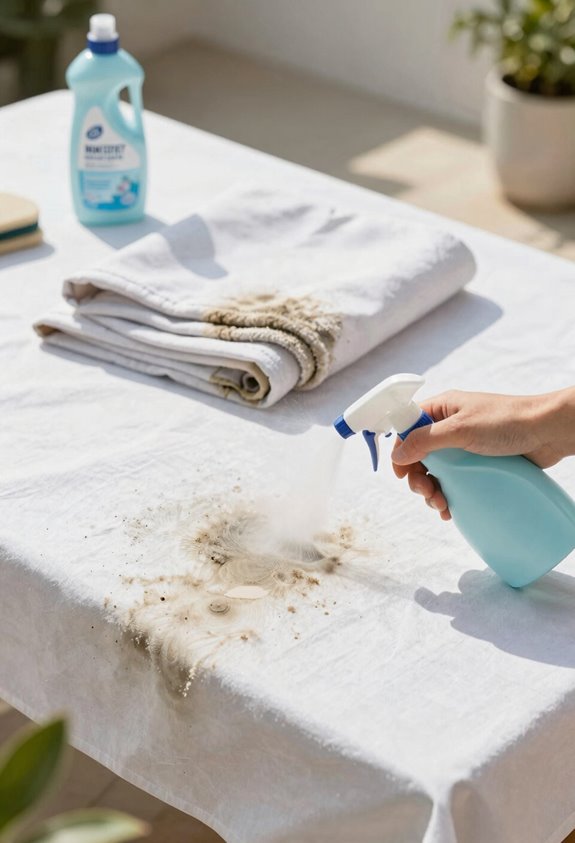
How exactly do you coax a year’s worth of pollen, bird droppings, and that suspicious green fuzz off your furniture covers without turning them into expensive rags? I’ve found the sweet spot between elbow grease and preservation, and it starts with restraint.
The secret to saving your furniture covers? Restraint beats brute force every time.
I mix mild dish soap with warm water, then grab a soft brush; never anything stiff that’d assault the fabric’s coating. I work in sections, letting the solution sit on stubborn mildew patches for five minutes before I rinse thoroughly. Here’s my battle-tested approach:
- Test cleaners on a hidden corner first; I’ve learned this the hard way after bleaching a gorgeous exlawn stripe into oblivion
- Avoid harsh chemicals entirely; they’ll degrade your waterproofing faster than a summer storm
- For stubborn stains, Golden Care Fabric Cleaner works without stripping protective layers
- Air dry completely, because damp fabric invites the very mold you’re evicting
The covers emerge refreshed, not ravaged.
Air Dry Completely (and When to Reproof)
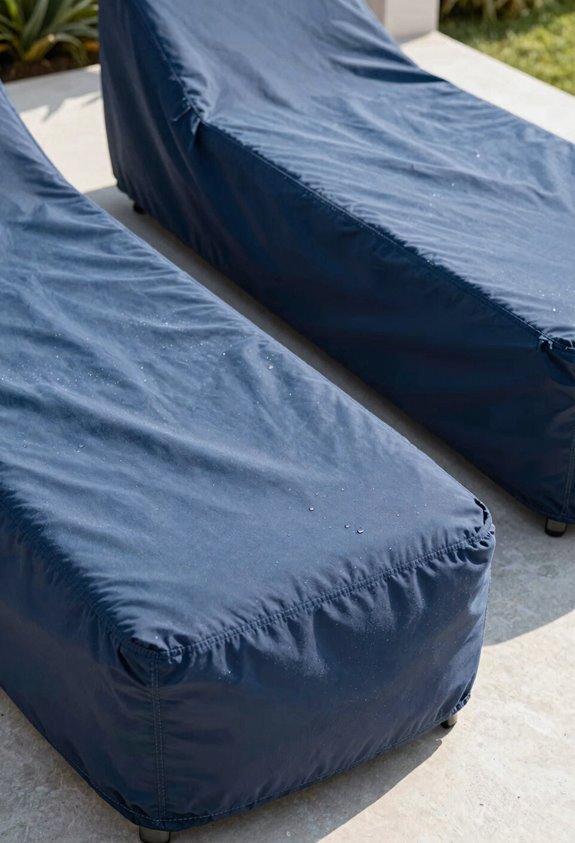
Once you’ve lifted that last bit of mildew from the fabric, you’re standing at a fork in the road where patience pays and haste costs. I always air dry my outdoor covers; machine drying destroys waterproofing and seams faster than a summer storm. For smaller pieces, I drape them over railings where the breeze does the work. For larger ones, I lay them flat on clean towels in direct sunlight, rotating every hour for even dryness.
| Drying Method | Time Required |
|---|---|
| Railing drape (small covers) | 2-4 hours |
| Towel flat lay (large covers) | 4-6 hours |
| Partial shade extension | +1-2 hours |
| Humid day adjustment | +2-3 hours |
| Final inspection gap | 30 minutes |
I check every crease and seam before calling it done; trapped moisture invites mold, and we’re in this together for mold prevention. Once dryness is absolute, I reproof with spray-on waterproofing, which restores that hydrophobic coating I murdered with soap. Skip this, and your outdoor furniture gets soaked next drizzle.
Store Covers to Prevent Mold and Fabric Damage
- Choose a storage space that’s clean, dark, and climate-stable; my garage failed me in Zone 7 humidity
- Elevate covers off concrete; air circulation underneath prevents wicking dampness
- Use breathable bags, not airtight totes, so residual moisture escapes
- Inspect quarterly for mildew, fabric fatigue, or coating degradation
Treat your covers like the gorgeous ex-lawn guardians they are.