My first deck attempt taught me that “structural enthusiasm” can run afoul of buried utilities, shallow bedrock, and a spouse who’s tired of weekend excavation. I’ve since learned to build beautiful, pipe-safe outdoor spaces without traditional framing, methods that skip concrete footings, protect root zones, and won’t require a second mortgage.
The five approaches I’ll share have survived three USDA zones, two curious toddlers, and one memorable incident with a municipal gas line. You’ll want to hear what not to do.
When Traditional Decks Won’t Work: Pipes, Budget, and Terrain Limits
Why sink thousands into a deck you’ll regret? I’ve learned the hard way that concrete patio plans shatter against buried plumbing, and permits won’t save you from ruptured pipes. My yard’s boundaries hide utilities, so I’m pivoting to pipe-safe landscaping that breathes and bends.
Concrete dreams crack against hidden pipes; I’m done paying for subterranean surprises I can’t see coming.
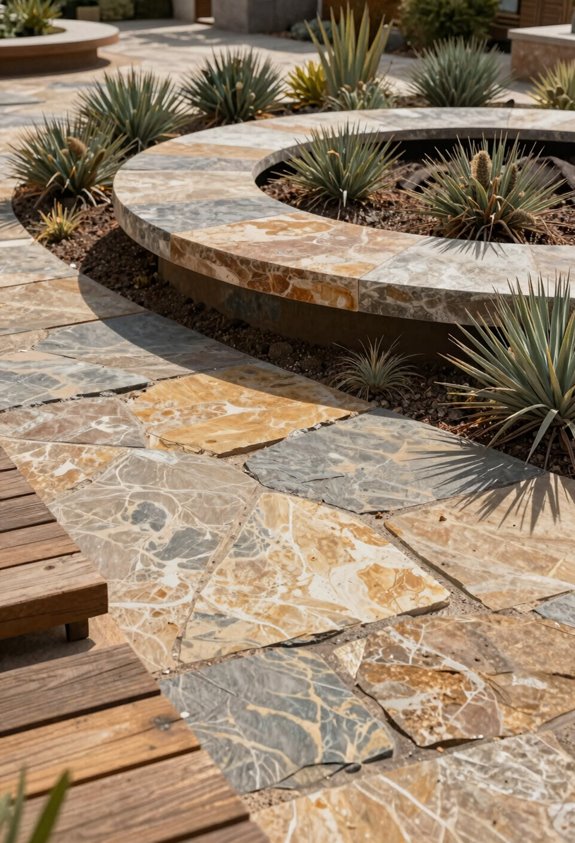
Budget reality hit: no mahogany platforms here. Instead, I’m orchestrating low-maintenance rock beds with blue crushed stone over commercial-grade weed barriers, pea gravel paths crunching satisfyingly underfoot, and stepping-stone paths that float above the chaos.
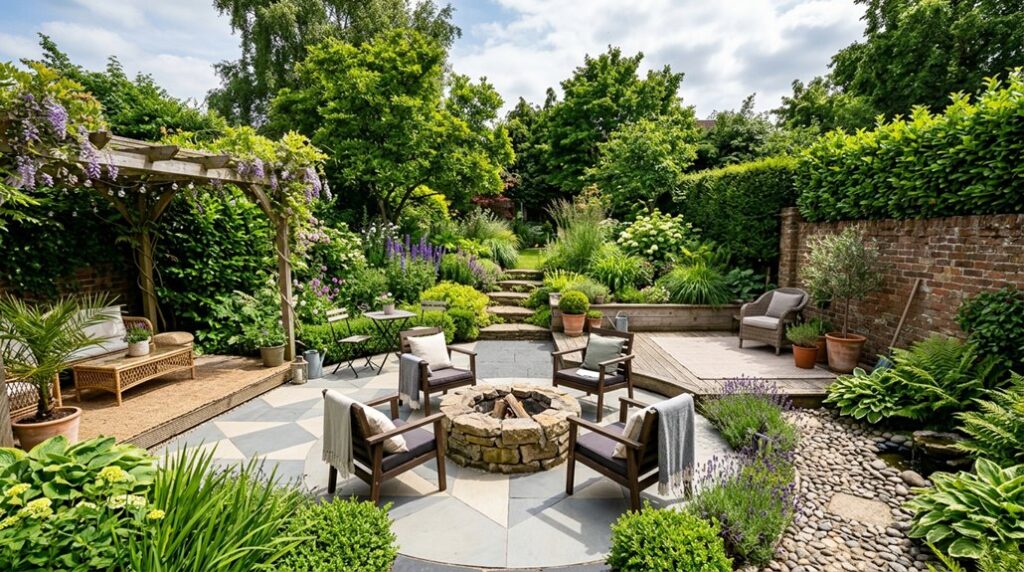
I’ve positioned weatherproof planters for seasonal outdoor decor: large cast-iron urns that anchor the space without trenching near gas lines. The result?
My “gorgeous exlawn” now hosts weekend gatherings where guests assume I hired designers. Secret: I’m just avoiding future excavation bills.
Gravel and Paver Patios: Level Surfaces Without Concrete or Digging
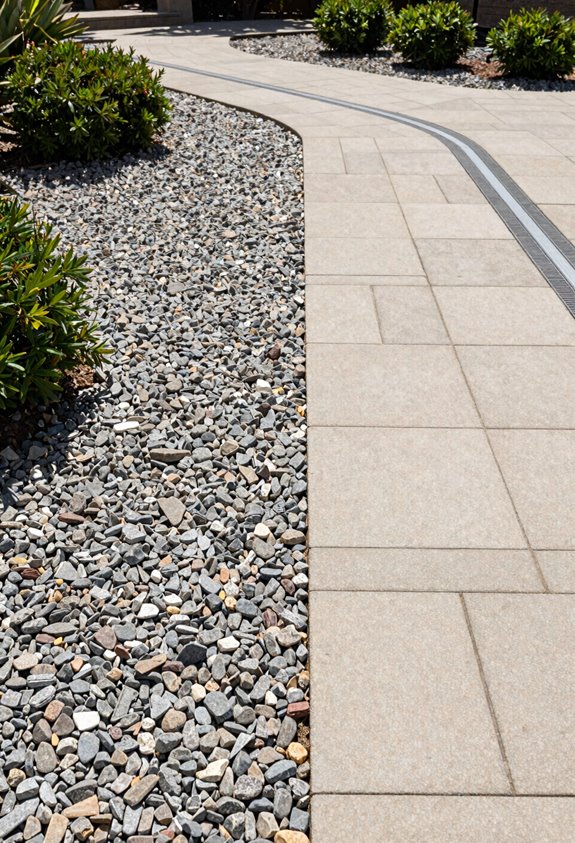
How deep can I dig before I’m talking to the utility company with a checkbook in hand? I’ve learned the hard way that gravel patios and paver patio installations let me skip that awkward conversation entirely.
Here’s what I’ve discovered about creating level surfaces without disturbing what’s buried below:
- Start with your weed barrier and sub-base: I use 4 inches of compacted crushed stone over landscape fabric, which prevents shifting and keeps my outdoor space stable through freeze-thaw cycles.
- Install permeable edging on all four sides; this maintains airflow and keeps your leveling surface from migrating into the lawn like my first attempt did.
- Layer pea gravel with stepping stones for solid walking zones that remain low maintenance and pleasant to use.
- Frame with elevated planters: former lawn becomes gathering space without root invasion risks.
Stone and Gravel: Hard Deck Alternatives That Protect Underground Pipes
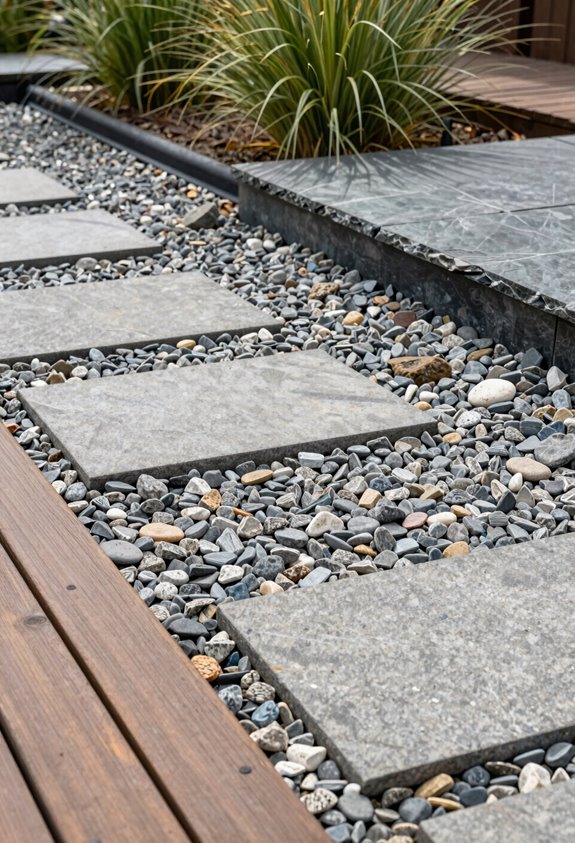
Gravel patios taught me to respect what lies beneath, but stone and gravel paths let me walk that line with confidence. I’ve laid pea gravel over thick weed barrier in my own landscape, creating a hard deck that handles drainage without crushing pipes.
You want outdoor living that won’t send you digging later. Stone paths define walking areas while leaving soil porous around buried plumbing. I pair blue rock beds with stepping stones; low maintenance and pipe-safe. The weed barrier keeps invaders down, but water flows through.
Skip concrete near your foundation; it heaves and cracks where pipes run. My gravel solution cost roughly $3 per square foot and took one weekend. You’ll belong to that tribe of gardeners who’ve learned: sometimes the smartest landscape is the one you can take apart.
Planting Over Pipes: Flower Beds With Stone Walkways
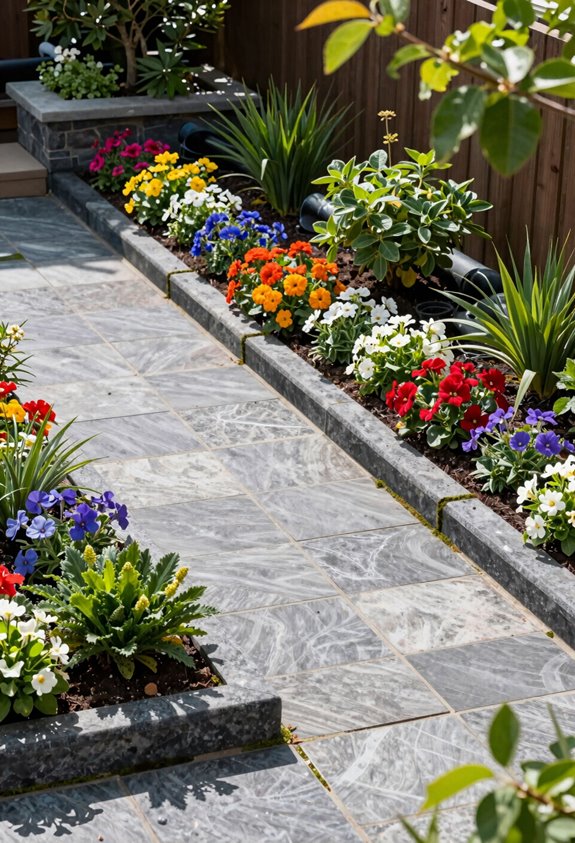
Where exactly should you step when your sewer line runs beneath the only sunny spot in your yard? I’ve wrestled with this exact dilemma, and I’ve learned that skipping traditional wood decking for flower beds with stone walkways gives you beauty without the buried-pipe anxiety.
I design my plantings near pipes with foot traffic protection in mind: stone walkways create that essential buffer. I lay a gravel base topped with weed barrier; this maintenance reduction strategy keeps roots in check and pathways pristine. I select shallow-rooted specimens, think sedums or creeping thyme, and supplement with large pots for flexibility when access calls.
Here’s what makes this practical and belonging-worthy:
- Shared purpose: your garden protects infrastructure while inviting community
- Visible care: stone walkways signal intention, not accident
- Seasonal return: perennials root you to place and people
- Tangible legacy: you’re building what outlasts lease agreements
Budget, Safety, and Maintenance: Choosing Your Best Alternative
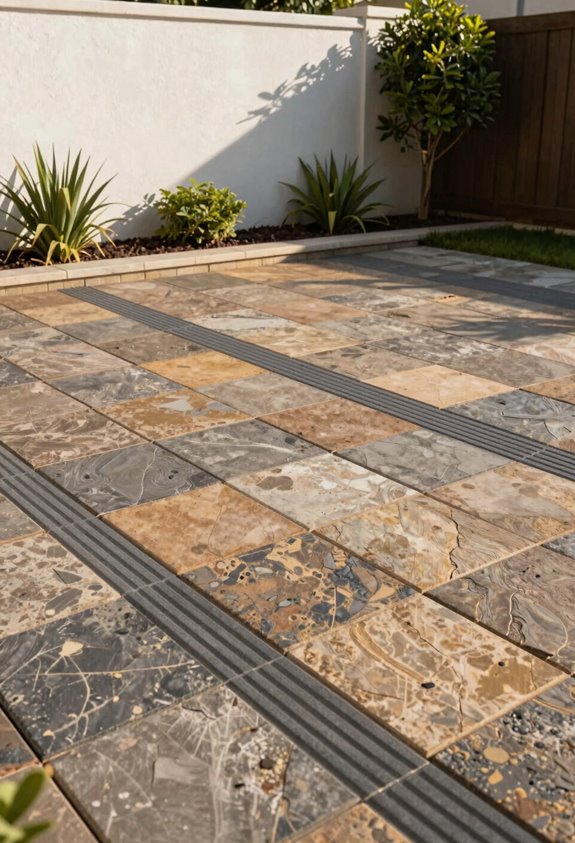
Why sink twelve grand into pressure-treated pine when I’ll be resealing it every eighteen months and cursing the splinters? I’ve learned that decking materials demand honest math: while pressure-treated lumber tempts with a $2,400 budget upfront, the maintenance cycle (staining every two years at $400 a pop) quickly eclipses composite’s higher initial price.
For relaxed low-maintenance living, I choose PVC or capped composite, which survives Zone 7 winters without cracking. Safety matters: I keep all structures pipe-safe, making sure alternative surfaces like pea gravel with 24-inch limestone stepping stones maintain airflow and accessibility around buried utilities.
These slip-resistant paths prevent the hydroplaning I suffered on poured concrete last spring. Calculating long-term costs, I’d rather invest once in granite dust foundations than fight wood rot decade after decade.