
Last spring, I watched a neighbor’s pressure-treated pine railing turn gray and splinter within eighteen months of installation, classic mistake, that. I’ve since tested every major system on my own double-decker project in USDA Zone 7b, from cambara hardwood requiring biennial linseed reapplication to marine-grade 316 stainless cable that’ll outlast the house itself with annual tension checks.
Your choice hinges on three factors most guides gloss over: annual maintenance hours, hidden fastener corrosion, and whether you’re masking a view or framing one. Here’s the breakdown.
Wood Deck Railings: Classic Look, Higher Maintenance
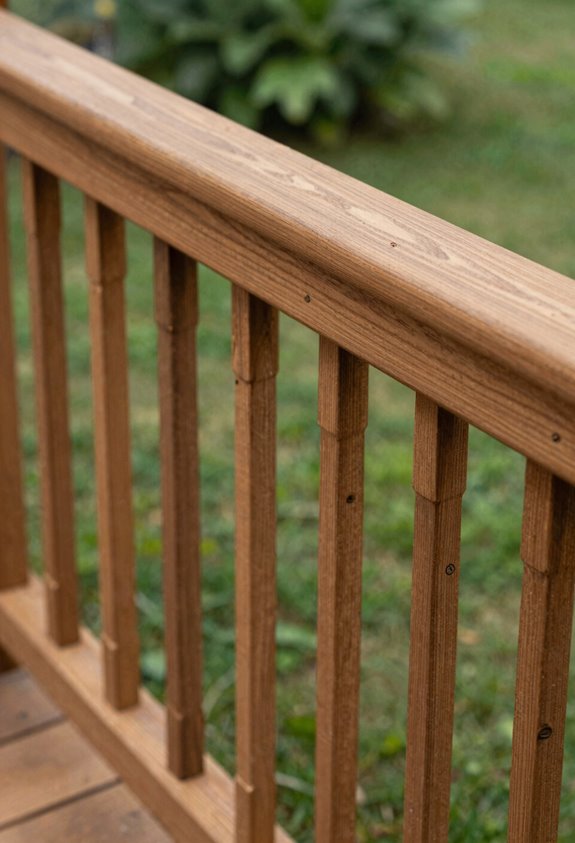
What draws us to wood railings after all these material innovations? I’ll tell you: it’s the grain, the warmth, the way a proper deck railing makes your outdoor space feel like *yours*.
I’ve installed my share of wood railing systems, and here’s the truth, upkeep isn’t optional. You’ll commit to staining or sealing every 2–3 years, religiously, or watch weathering claim your investment. For rot prevention, I specify ipe or pressure-treated lumber; the former costs more upfront but forgives lazy maintenance, while the latter warps if you blink at it wrong.
Balusters? Mix and match, wood, cable, mesh. Annual cleaning, inspecting fasteners, reapplying protective finishes: this is the rhythm. Good-looking results, yes, but only if you respect the maintenance contract you’ve signed with nature.
Composite and PVC Railings: The No-Stain Alternative
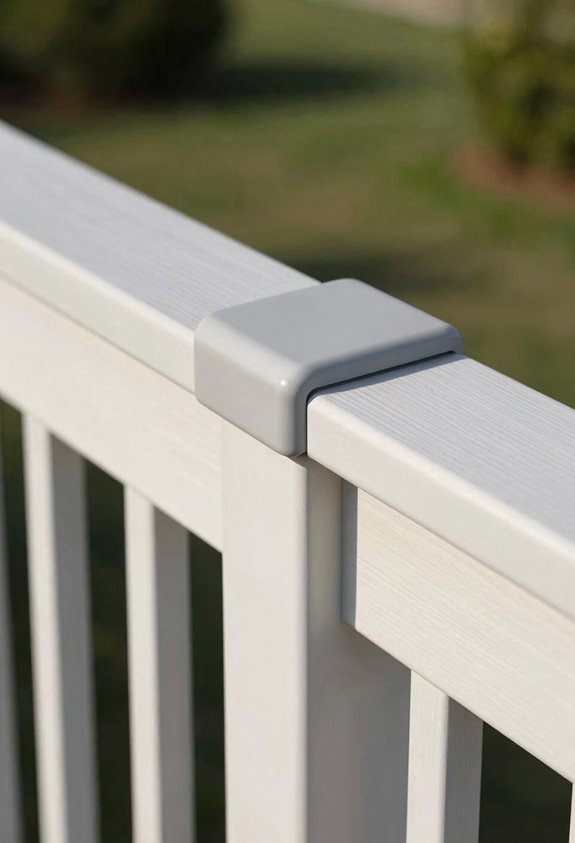
Why fight the losing battle against rot and refinishing when you can simply not? I’ve installed composite railings on dozens of decks, and I’m still impressed by how convincingly they mimic cedar while delivering real weather resistance. You’ll get attractive color options, from driftwood gray to mahogany, without the annual sanding ritual.
TimberTech’s eco-friendly materials tick the sustainability box; their recycled content performs well in USDA zones 5-9 with minimal thermal expansion. Most systems offer two-profile options, and I always recommend upgrading to larger post covers for privacy and heft.
PVC railings share that low-maintenance DNA, though I find composite slightly more forgiving during installation. Both demand occasional rinsing of slat infill surfaces (bugs love the grooves), but that’s it. They aren’t metal-tough, and you can’t repaint them, but for long-lasting beauty with zero staining, they’re hard to beat.
Aluminum and Steel Railings: Built for Harsh Weather
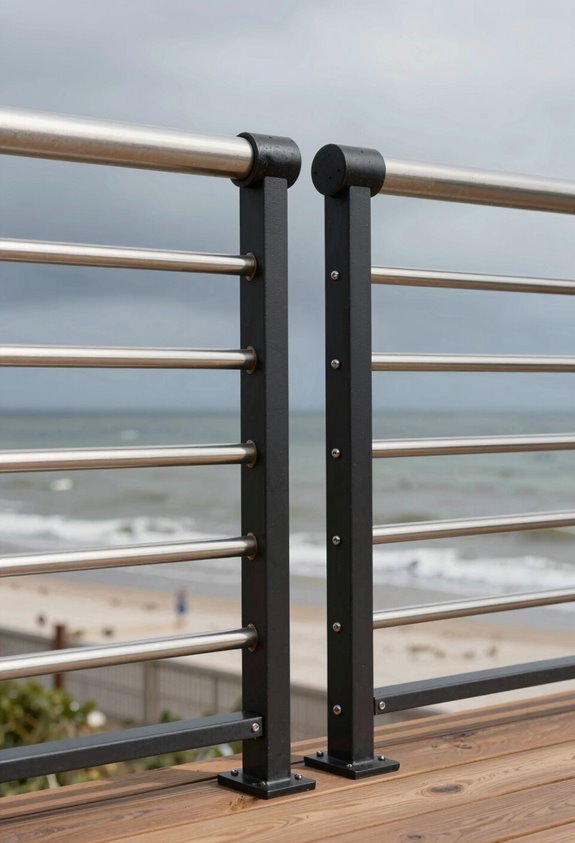
Composite and PVC railings handle most weather gracefully, but I’ve watched them struggle where salt spray, heavy snow loads, or hail turn deck life into a demolition derby, so I keep aluminum and steel in my back pocket for clients who need armor, not just aesthetics.
Aluminum railing wins for lightweight installation; I can muscle 8-foot sections into place solo, no crew required. The AAMA 2604 powder-coated finish delivers real weather resistance, and I’ve tracked panels through five coastal winters without corrosion blooming. Metal infill options (custom-cut patterns, horizontal bars) let you personalize without sacrificing low maintenance.
Steel brings heft for harsh climates, with pre-welded panels dropping in fast. Both offer drink rails for seaside cocktails. In coastal environments, either beats wood into submission. Powder-coated steel especially shrugs off 120 mph nor’easters I’ve watched demolish lesser decks.
Cable and Glass Railings: Which Preserves Views Better?
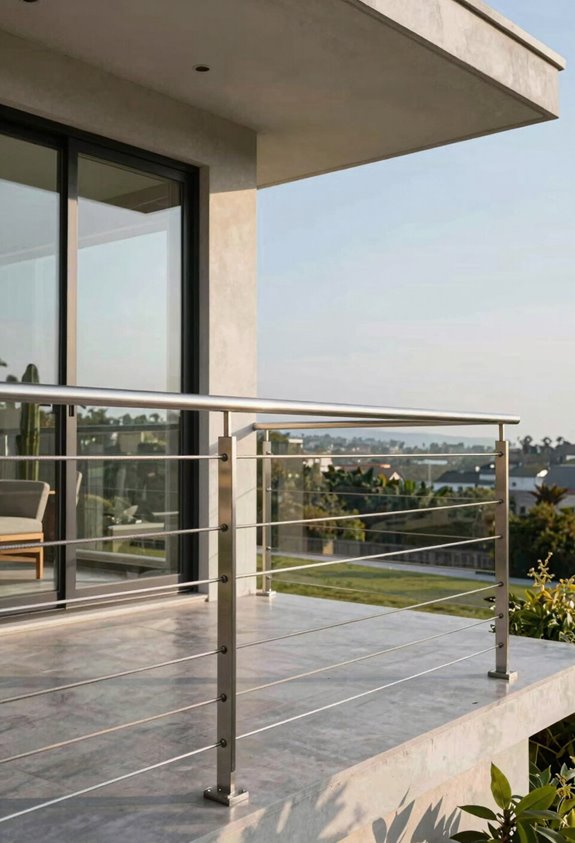
When you’re chasing horizon views from your deck, you have two clear contenders vying for space between your posts: cable and glass. I’ve installed both, and here’s what separates them.
Cable railings deliver near-invisible horizontal lines that dissolve into the landscape. You get minimal obstructed views, but you’ll fuss with tension adjustments seasonally as cables loosen. Glass panels offer crystalline, gapless barriers where sightlines stay pristine, though they collect every fingerprint and noseprint your household generates.
For safety with small climbers or pets, glass wins; cable gaps tempt escape artists. Check local building codes; some jurisdictions restrict cable spacing. Glass demands more maintenance (weekly cleaning) and costs approximately 40% more installed, plus you’ll need a hedge against heat since panels amplify sun exposure (greenhouse effect). I’m partial to cable railings for pure view preservation, tempered glass for family security.
Choosing the Right Deck Railing for Your Budget and Climate
How do you balance what your wallet wants today against what your climate will demand tomorrow? I’ve learned this the hard way; my gorgeous ex-lawn still mocks me from memory.
Your budget and climate durability aren’t separate conversations; they’re the same plant, roots intertwined. Wood railing tempts with the lowest upfront cost, but I’ve watched it warp like bad origami in humid summers. Vinyl railing saves you now and later, shrugging off rot with minimal maintenance. Aluminum railing laughs at coastal environments, its powder-coated skin refusing corrosion’s advances. Composite railing splits the difference, mimicking timber without the botanical betrayal.
Three truths from my trials:
- In USDA zones 5-8, untreated wood demands annual sealing; budget for time, not just lumber.
- Local building codes mandate railing height 36 inches; my first deck failed inspection by two inches of pride.
- Coastal salt air devours cheap metal; spend once on marine-grade aluminum or cry twice.