I’ve singed my eyebrows, I’ve sacrificed fillets to the grill gods, and I’ve finally cracked the code. BBQ salmon demands respect: too hot and you’re scraping charred remains; too timid and you miss that gorgeous crust. The real question isn’t whether you can, it’s whether you’ll master the variables before your next cookout.
Grill Salmon Directly on the Grates
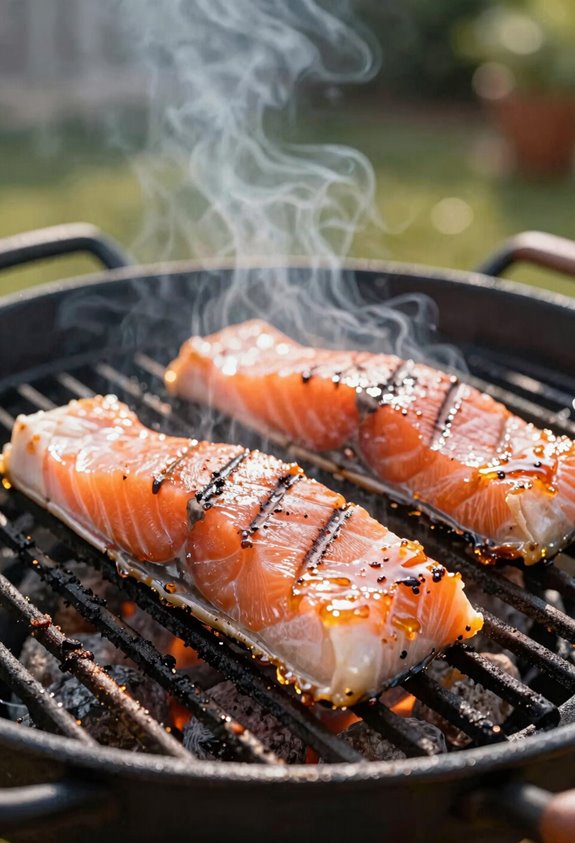
Why complicate a fish that already knows to swim? I don’t, and you shouldn’t either. Salmon grilling directly on the grates delivers that gorgeous, lacquered crust we’re all chasing.
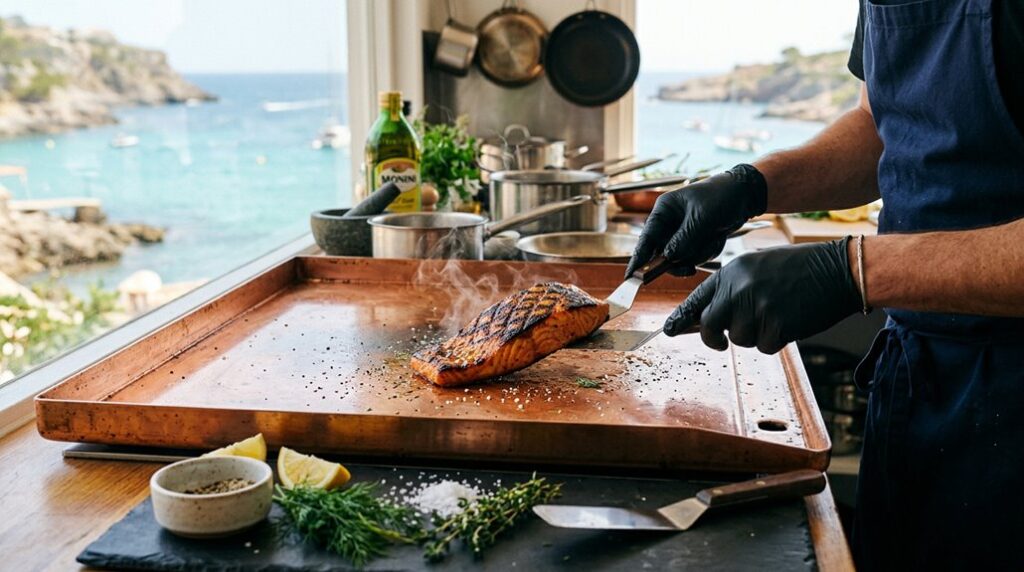
I preheat to 450°F; lid down, building fierce direct heat that sears flesh in minutes. Oiled grill grates matter enormously; I’ve watched too many fillets surrender half their meat to sticky bars. I use skin-on center-cut fillets, pressing flesh-side down for 2–3 minutes of aggressive searing. The flip reveals charred perfection.
Then I throttle back: grill temperature drops to 350°F, skin-side down now, finishing 2–5 minutes. I pull at 135°F internal; carryover pushes doneness temperature to that USDA-mandated 145°F during rest. Ten minutes patience rewards you with salmon that actually respects your effort.
Grill Salmon in Foil for Easy Cleanup
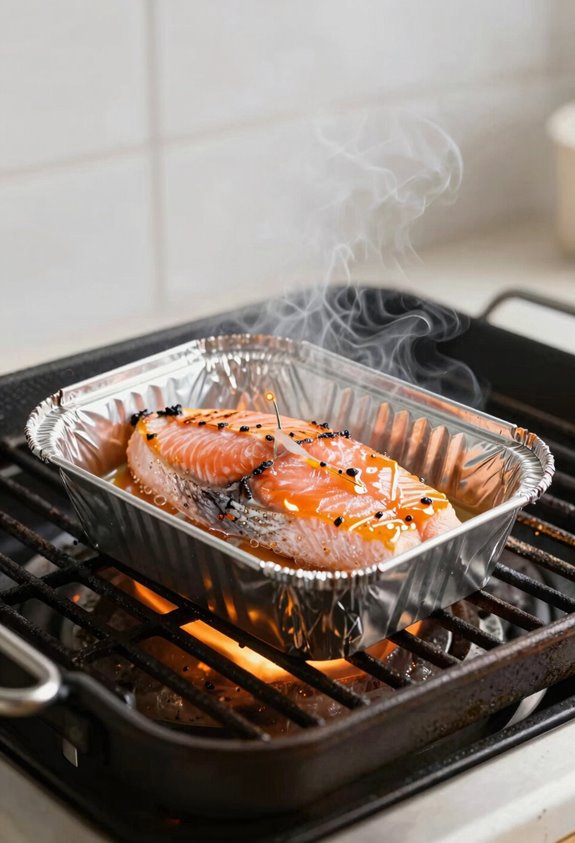
Sometimes I want that seared crust, and sometimes I want to drink my beer without babysitting fish over open flames. That’s when I reach for the foil method on my salmon grill.
I preheat to medium-high heat, about 375–400°F, lay the fillet on lightly oiled foil with citrus slices underneath, salt aggressively, and seal the edges, venting with tiny holes so steam escapes. Fourteen to eighteen minutes later, I’ve got dinner without the scrubbing. The foil traps moisture, prevents dry edges, and contains every drip for easy cleanup.
I slide my doneness thermometer through the foil at 14 minutes, pulling when I hit 140°F; carryover cooking finishes the job to 145°F. The fish steams in its own juices, and I don’t sacrifice a single gorgeous evening to dish duty.
Prep Your BBQ Salmon: Skin-On vs. Skin-Off
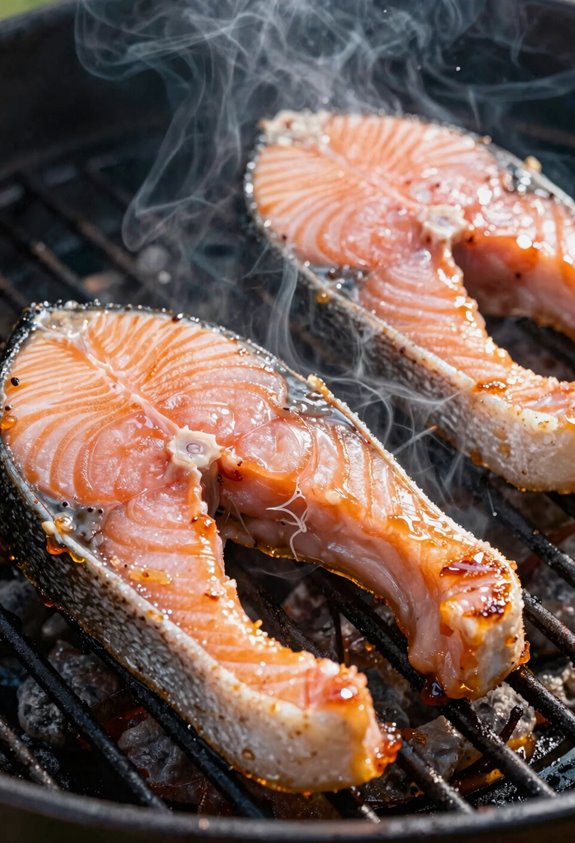
At the fish counter, I always pause over this decision: skin-on gives me insurance against the grate, while skin-off demands more babysitting than I sometimes care to give. When I’m direct grilling, I reach for center-cut fillets with even thickness; those dry edges wreck a good piece of fish.
| Skin-On | Skin-Off |
|---|---|
| Natural barrier between flesh and grill skin | Requires foil or basket to prevent sticking |
| Fat renders, adding flavor; wait for skin release | Flips easily but watch for flaking |
| Rest after cooking, peel if desired | No rest advantage, serve immediately |
I place salmon skin-on skin-side down first, let the fat render, and flip once. The protection matters more than presentation. If you must go bare, foil’s your friend.
Gather the 4 Essential Ingredients
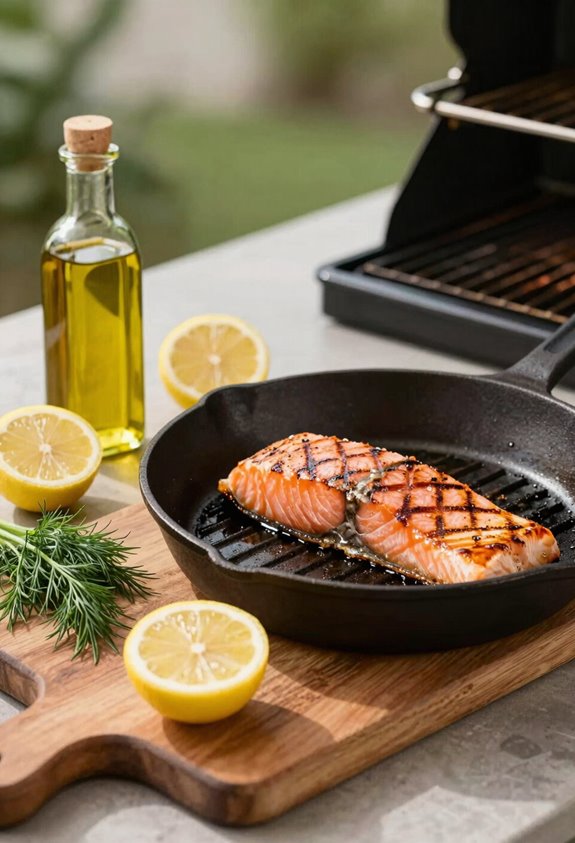
What do I actually need before the grill gets hot? I’ve learned the hard way that four essentials separate success from disaster.
Start with center-cut salmon fillets, and I’m adamant about skin-on; it’s your insurance policy against sticking and falling apart. The skin creates a barrier so you can grill skin-side first with confidence, then flip without the flesh shredding like my first attempt in 2019.
Next, grab high-smoke-point oil; grape seed or refined olive oil work beautifully. Don’t waste extra virgin; it burns bitter before the fish cooks through.
Finally, kosher salt and black pepper. I apply oil directly to the fish, then season generously. The coarse salt dissolves slowly, building a gorgeous crust while the pepper adds subtle heat.
Optional lemon, garlic, or paprika? Sure. But master these four first.
Set Up Your Grill for BBQ Salmon
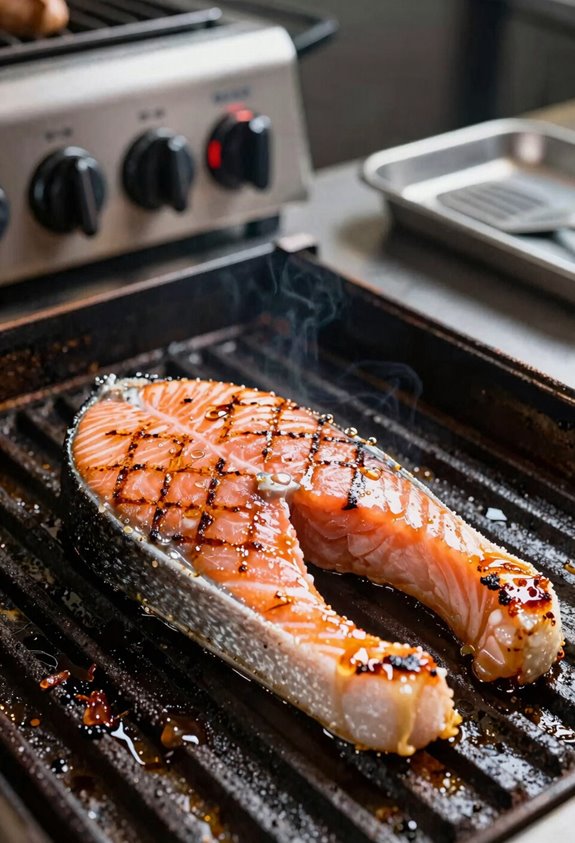
Why does salmon stick to the grill like it’s got abandonment issues? Because you didn’t oil the grates, friend. I’ve learned this the hard way so you don’t have to.
Here’s how we build our salmon sanctuary together:
- Crank the heat to 450°F for direct grilling or 375–400°F for indirect grilling with foil; your temperature choice shapes everything.
- Oil aggressively; I use a folded paper towel and tongs, rubbing until the grates gleam like promise.
- Position skin-side down first, letting that natural barrier protect the flesh for 6–8 minutes before flipping.
- Rest the fish briefly after cooking; carryover heat finishes the job while you gather your people.
Whether you’re banking briquettes for indirect grilling or searing directly, you’re not just cooking; you’re building tradition.
Check Doneness: Temperature, Touch, and Timing
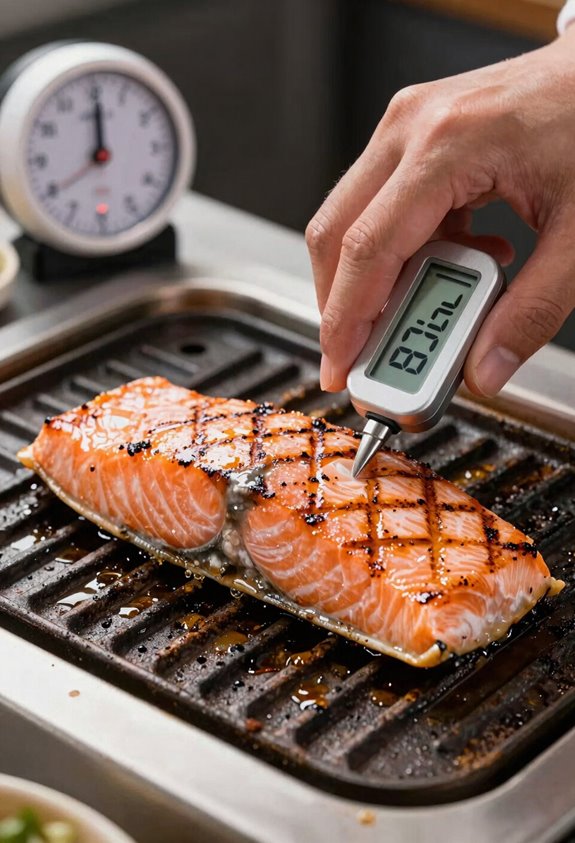
When exactly does this finned investment switch from translucent vulnerability to opaque perfection without collapsing into protein resembling overwatered chia pet matter? I’ve learned to trust three guides for salmon doneness on the grill.
First, temperature: I pull my fillets when the thickest part reads 120–130°F on my thermometer for medium-rare, letting carryover cooking finish the job during resting. The USDA says 145°F, but I’ve found that produces the texture of a gorgeous ex-lawn.
Pull salmon at 120–130°F for medium-rare; the USDA’s 145°F turns your fillet into turf.
For touch and timing, I cook 6–8 minutes skin-side down, then 2–4 minutes flipped. Indirect methods need 12–19 minutes depending on thickness.
The salmon’s done when it flakes easily and the center turns opaque; translucent means you still have work remaining, and chalky means you’ve overwatered your protein garden.
Stop Sticking, Dryness, and Flare-Ups
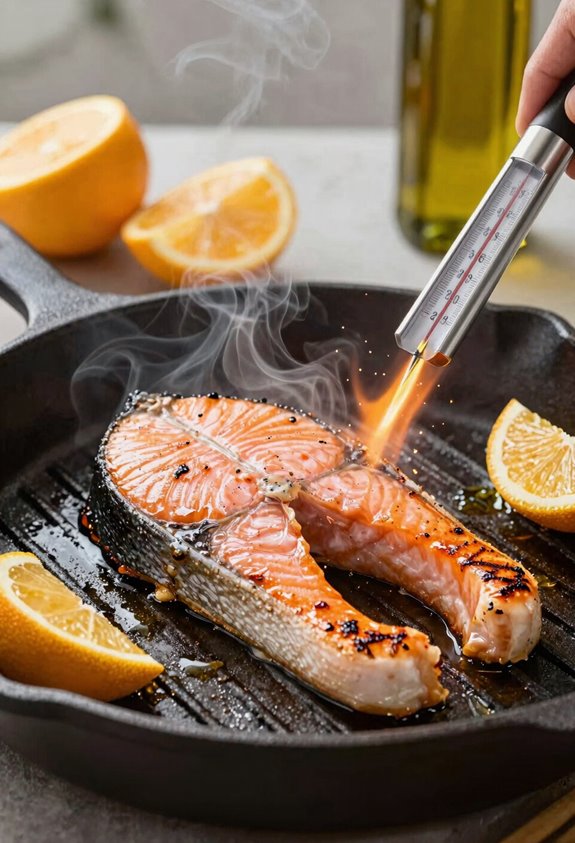
How often have I watched a perfect fillet weld itself to the grate like barnacle to hull, or erupt into flame like a tiny, delicious volcano? I’ve learned to prevent sticking by oiling the fish itself, not the grill, then laying it on screaming hot grates at 450–500°F; the sear releases clean when it’s ready.
I cook with salmon skin down to shield the flesh, pulling at 125–130°F internal temperature before I let it rest 1–2 minutes; carryover finishes without that gorgeous exlawn turning to chalk.
Here’s my battle-tested code:
- Oil the protein, never the bars
- High heat sears; don’t rush the flip
- Indirect beats flare-ups every time
- Always rest, or regret dryness
We’re in this together.
Speed It Up or Slow It Down
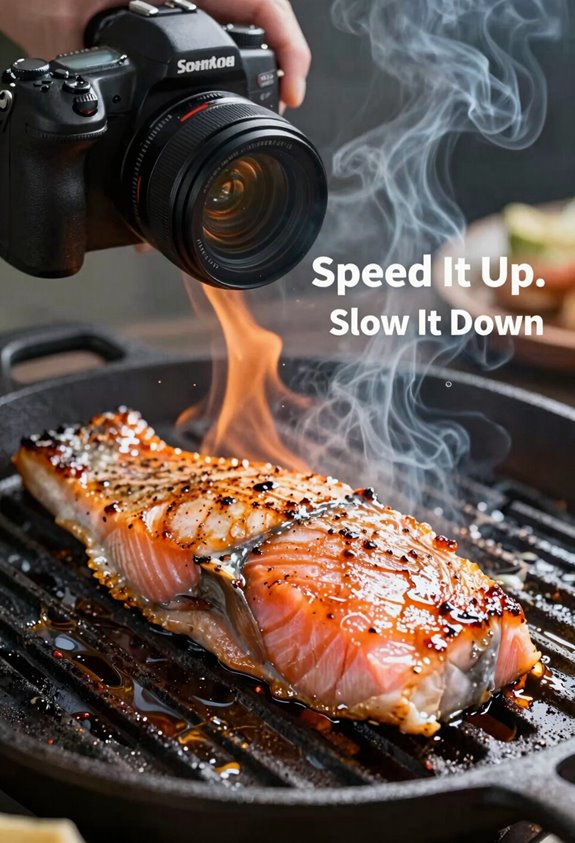
Where exactly do you stand on the eternal salmon dilemma: blast it fast and risk a cardiac arrest in fillet form, or take the scenic route and flirt with overcooked oblivion? I’ve done both, and I’m here to tell you there’s a middle path that actually works.
When I’m racing the sunset, I crank my grill temperature to 450°F for direct grilling. I lay that skin-on fillet flesh-side down for two minutes, just enough to sear without sticking, then flip and finish skin-side down until my doneness thermometer reads 135°F. That five-minute rest period carries it to 145°F, USDA-safe and still moist.
For thicker cuts, I’ll drop to 375°F and wrap in vented foil with citrus, stretching to eighteen minutes. Same doneness thermometer rule applies. Either way, you’re in control, not the clock.
Pair With Sides and Sauces
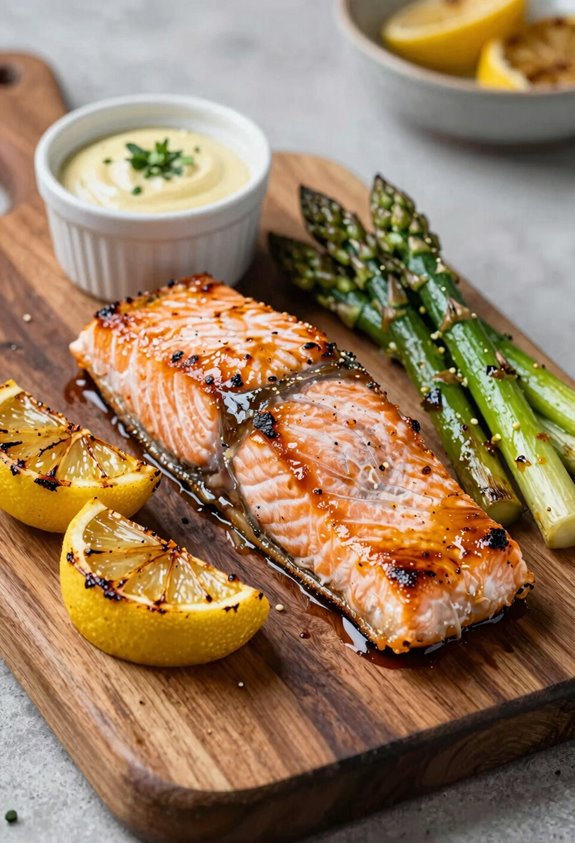
I’ve wrestled the final fillet off the grill without triggering a structural collapse, and now I’m facing the reality that even perfectly cooked salmon needs a supporting cast to justify the $20-per-pound investment. I’ve learned that grilled salmon sings when you build your plate with purpose, not panic.
Here’s what my trial-and-error has taught this community:
- Brighten boldly: I pair gremolata or tahini green goddess sauce with lemon wedges for acidity that cuts through rich salmon skin.
- Grill your garden: zucchini and bell peppers, plus watermelon or mango, turn the grill salmon experience cohesive.
- Anchor with starch: bulgur wheat or herbed potato salad prevent the gorgeous exlawn of a light meal.
- Sauce smartly: chimichurri or lemon-butter sauces amplify those citrusy notes; leftovers refrigerate airtight for 48 hours, served cold to avoid dryness.