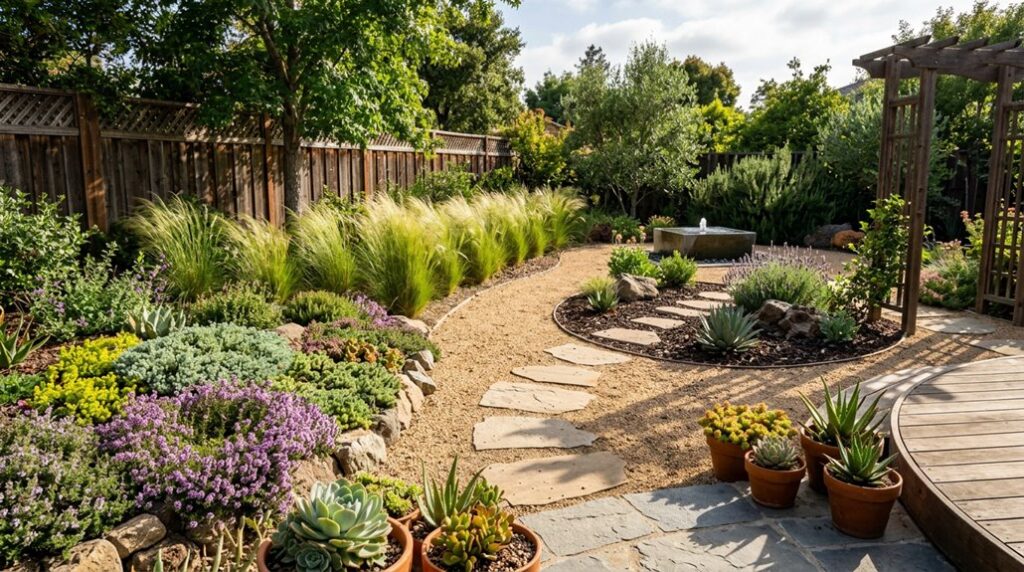
I measured my former lawn again last weekend, still 847 square feet of gorgeous exlawn, now healthy as thyme between flagstones, and realized I’d converted every grass patch I’d ever owned before finally trusting the data.
Seven alternatives actually work, three will fail in your specific conditions, and one method costs $0.17 per square foot if you time it right. The trick isn’t picking plants; it’s knowing which mistake you’ll make before you make it.
Choose Ground Covers That Look Like Lawn
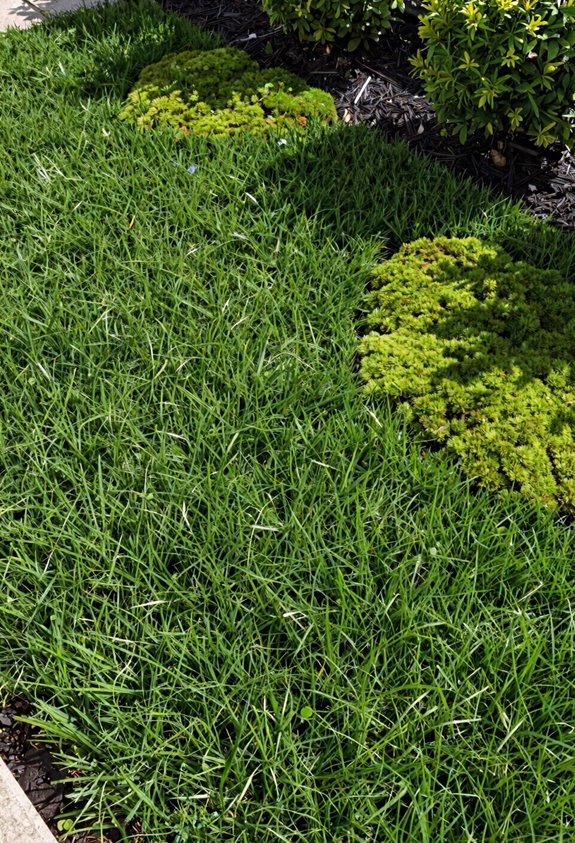
The trick to fooling the eye, and maybe your HOA, is finding plants that read as “lawn” from a distance but quietly refuse to be mowed. I’ve built my exlawn by swapping turf for creeping mosaics that stay under three inches without a blade touching them.
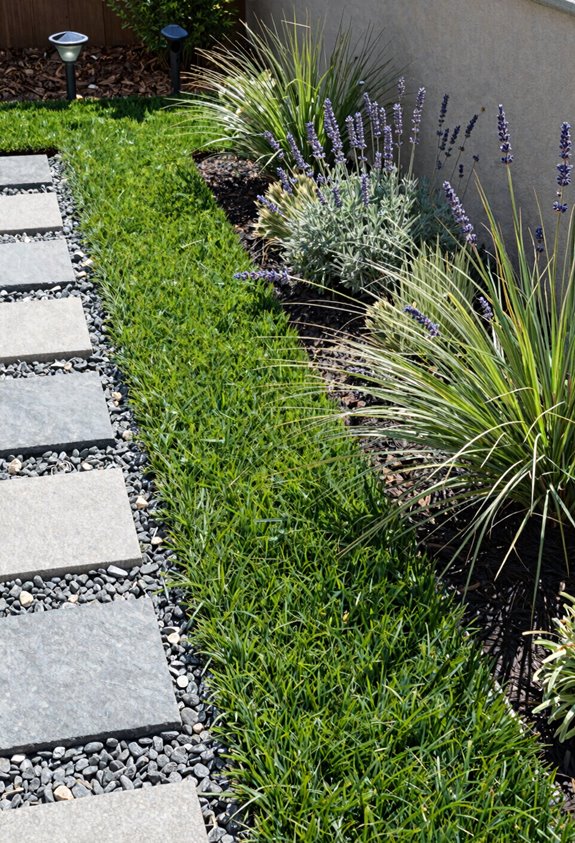
Lilyturf forms thick, grasslike ground cover spreading fast in sun or shade, though you’ll want stepping stones since it’s lumpy underfoot. For drought-tolerant options, thyme demands six inches of fast-draining soil and two-to-four years of weeding first for low-maintenance coverage, but the fragrance rewards your patience.
I pair golden creeping Jenny with dwarf cinquefoil for a chartreuse lawn replacement that shifts red in winter, needing supplemental irrigation during dry spells. These native plants create year-round coverage without the mower.
Plant Meadows and Lawn-to-Pollinator Borders
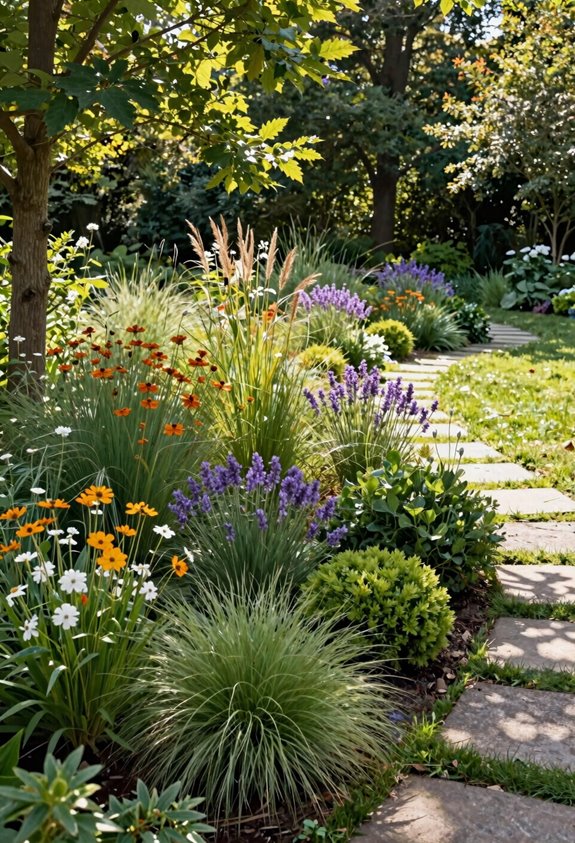
Where do I start when I want something alive beneath my feet that actually belongs here? I start with a native meadow, the lawn alternative that finally lets me stop pretending I’m in suburban England.
Soil preparation matters more than you’d think. I learned that after my first drought tolerant attempt collapsed under foxtail pressure. Now I spend one season killing Bermuda grass, then plant native plugs (seed’s often unavailable in Maryland), mixing 50–70% native grasses with flowering perennials suited to my Coastal Plain soil.
Pollinator borders frame the edges, softening transitions while boosting habitat creation value. It’s expensive upfront and three years before maturity, but I’ll trade that for low maintenance and birds actually visiting. Interplant flowers among grasses for visual interest; my gorgeous exlawn now hosts butterflies I’d never seen before.
Grow Edible Lawns and Low-Maintenance Food Gardens
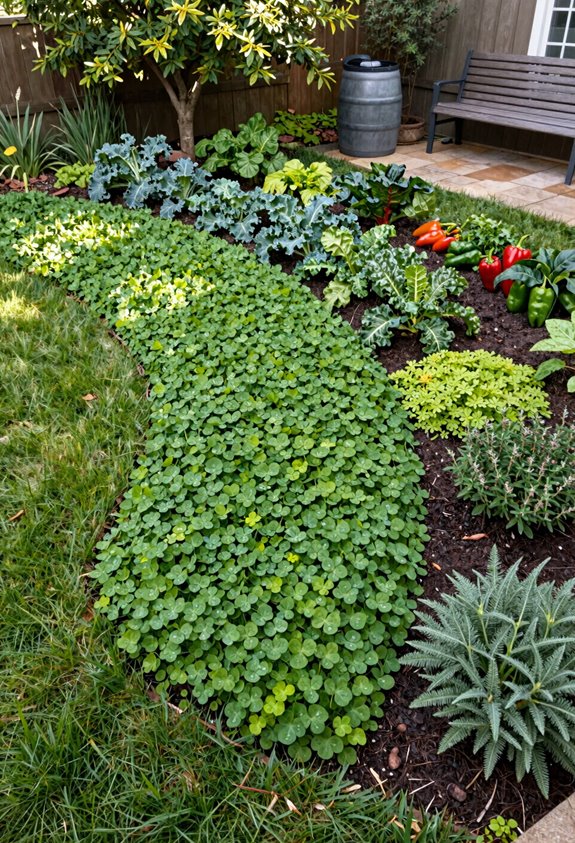
Why settle for turf when your lawn could feed you? I’m converting my lawn to edible lawns layered like a forest, permaculture in action. My seven-tier food forest stacks trees, shrubs, vines, herbs, and groundcovers, mimicking native plants patterns without tilling, weeding, or fertilizing.
Wild strawberry now carpets my Zone 5 front yard: native plants, bird-feeding, pollinator-sustaining, and gloriously low maintenance. I’m three years into a grow-meadow using regional plugs since commercial Maryland-native seed proved mythical; initial weed management was brutal, but the habitat-function payoff, a biodiversity explosion, justifies my muddy knees.
For drought-tolerant areas, I’ve planted yarrow and yerba buena herbal lawns, channeling foot traffic to designated paths. I source local seed, weave pollinator hedgerows through my vegetables, and watch my gorgeous exlawn feed both my household and the neighborhood ecosystem.
Build Shade and Hardscape: Patios, Paths, and Canopy
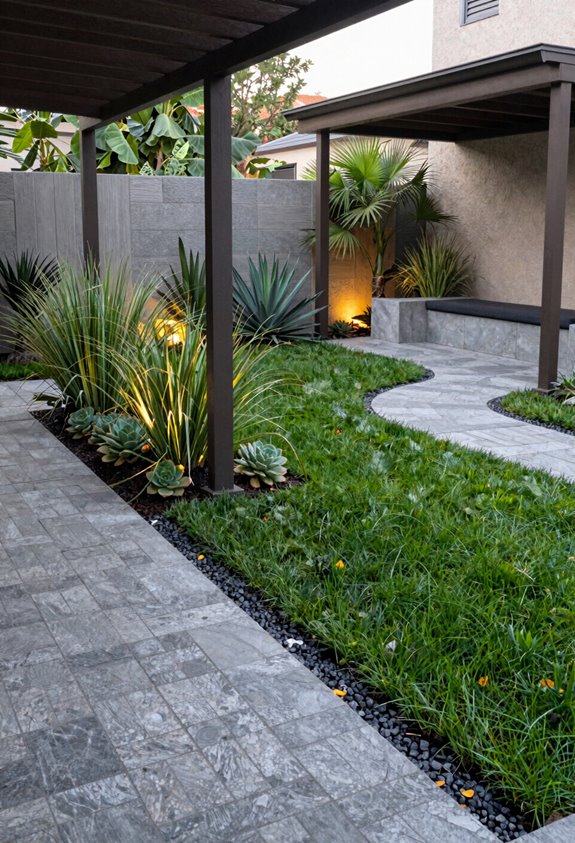
How much of your weekend disappears behind a mower? I reclaimed mine by swapping thirsty turf for patios, paths, and canopy, functional outdoor rooms that don’t demand weekly sacrifice.
Permeable hardscape proved my smartest move: decomposed granite paths (four inches compacted, $45 per cubic yard) and pervious concrete pavers let rainwater sink where it falls, dodging runoff complaints from neighbors. I framed these low-maintenance surfaces with shade-compatible plantings, think heuchera, ferns, and mahogany-hued coral bells, creating negative space that actually makes the green stand out.
My cedar canopy went up in a weekend; now summer dinners happen beneath dappled light instead of sweltering turf. The ecological trade-off is minimal, if you integrate habitat features. I’ve got mason bees nesting in hollow stems beside my gravel seating area. A former lawn, with zero guilt.
Pick Your Priority: Maintenance, Ecology, or Use
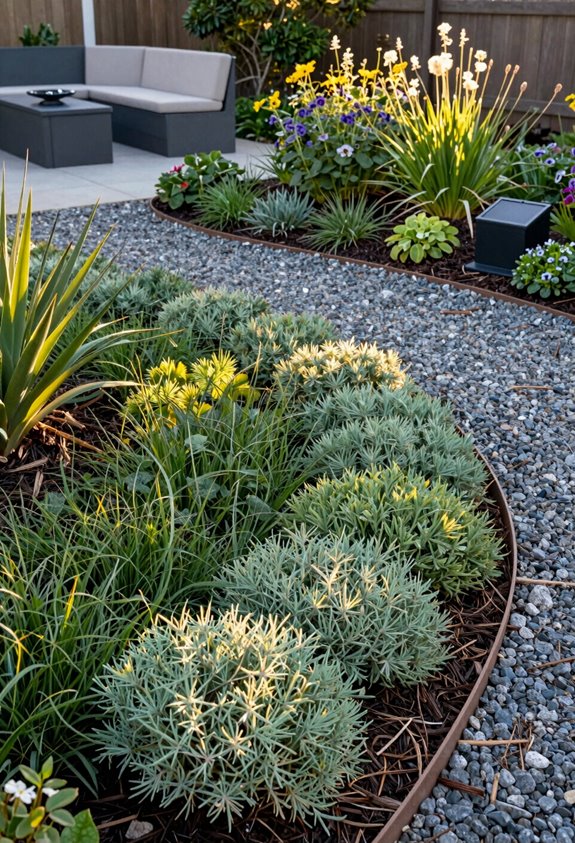
What exactly do you want your weekends back for; that’s the question that splintered my lawn-replacement project into three distinct paths before I’d finished my second cup of coffee.
If you’re chasing maintenance relief, exlawn strips out the mower, fertilizer, sprinkler, and most weeding while delivering year-round visual interest without the guilt. I watched my neighbor’s excellent exlawn do well on benign neglect while I still dragged hoses in July.
For ecology enthusiasts, ground-cover mosaics—dwarf cinquefoil threading through golden creeping Jenny, Sedum acre, and Dutch white clover—shrink lawn area while building soil health and pollinator highways. My clover takeover took two seasons; soil amendment ran $200 for 400 square feet.
Use-focused designers trade turf for meadows, native hedgerows, and rain gardens that handle water management while providing habitat. Phase it—patience beats bankruptcy, and monitoring prevents the “oops, invasive” moment I had with Crown vetch in Zone 6b.
Remove Your Lawn: Three Methods That Work
I’ve tried three ways to erase a lawn, and each method demands different trade-offs between speed, sweat, and patience. You can power through with a sod cutter or rototiller; both run about $45 daily to rent, but machinery won’t fix what lingers underground. If you’re cheap, stubborn, or both, grab a flat shovel and expect thirty square feet per hour of honest labor. Or smother the whole mess with cardboard and mulch and wait six months to a year for nature to do your dirty work.
Sod Cutter Method
The sod cutter method is the nuclear option for lawn removal, and I’ll admit it’s labor-intensive enough to make you question your life choices halfway through. You’ll rent a gas-powered sod cutter from any equipment rental store for about $45 daily, which slices the sod itself and spits out manageable strips, substantially faster than manual removal, though your arms will still ache for days.
I considered a rototiller at the same price point, but it digs up grass and weeds while leaving roots and seeds intact, guaranteeing a weedy comeback. The sod cutter avoids this trap entirely, delivering clean slate results.
Those heavy sod clumps? Don’t haul them to green waste. I’ve found cold-composting them yields gorgeous, crumbly compost within months, turning your former lawn into nourishment for whatever comes next.
Manual Shovel Removal
Why pay rental fees when you have a shovel and a stubborn streak? I’ve embraced manual removal for my lawn alternatives, and while I’m clocking roughly thirty square feet per hour, slower than machinery, admittedly, the precision pays dividends. I slide my flat-edged shovel beneath sod roots, lever upward, and extract chunks with surgical satisfaction. This sod removal shines for targeted soil preparation, especially where I’m plotting raised beds against my fence line.
The gorgeous ex-lawn doesn’t vanish; it transforms. I’m composting my harvest cold-style, no turning required, letting microorganisms feast quietly. Sure, my shoulders complain, but I’ve dodged the $45 rental and those wretched root fragments mechanical tillers always seem to miss. For intimate spaces demanding clean extraction, nothing beats hand-to-root combat.
Sheet Mulch Smothering
When my shovel-wielding days ended in a spectacular fit of lower-back betrayal, I discovered sheet mulching, or as the permaculture crowd calls it with slightly unnerving enthusiasm, “lawn lasagna.” This method asks you to smother your grass rather than excavate it, which appeals to my lazier instincts and my credit card’s desire to avoid rental yard equipment.
You lay eight overlapping newspaper layers, or one cardboard layer if you’re feeling decadent, then top them with three inches of weed-free mulch. The newspaper blocks light and oxygen from sparking photosynthesis, while soil decomposition gets underway as beetles and fungi gorge on your former turf. Water everything thoroughly, then wait six months to a year.
I’ve learned grass smothering demands patience and a sturdy edge barrier; without one, your gorgeous ex-lawn becomes a runway for wandering groundcovers. Sheet mulch smothering won’t win speed contests, but it builds soil while you plan your next move.
Match Every Alternative to Your Climate and Soil
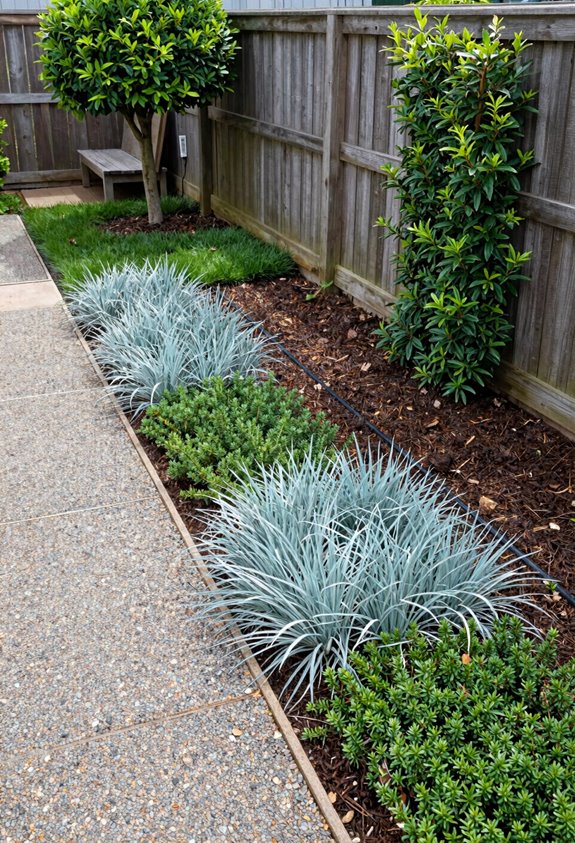
Where exactly do you plant something that refuses to die without constant attention? I learned the hard way: you match it to what you’ve actually got, not what you wish you had.
Match your plants to what your yard actually is, not what you wish it would be.
My xeriscape experiment started with ignoring soil type entirely, rookie mistake. Now I lead with native plants that evolved here, not prima donnas demanding irrigation.
Here’s what I’ve figured out:
- Check your soil type before buying anything; clay, sand, or loam dictates everything
- Match groundcovers to your actual sun exposure, not your “mostly shady” optimism
- Prioritize drought tolerance in hot zones; you’ll thank yourself in August
- Factor shade tolerance into every corner decision
- Calculate water savings: proper xeriscape cuts use 50%, paying back your effort
The gorgeous exlawn happens when you stop fighting your yard’s identity.